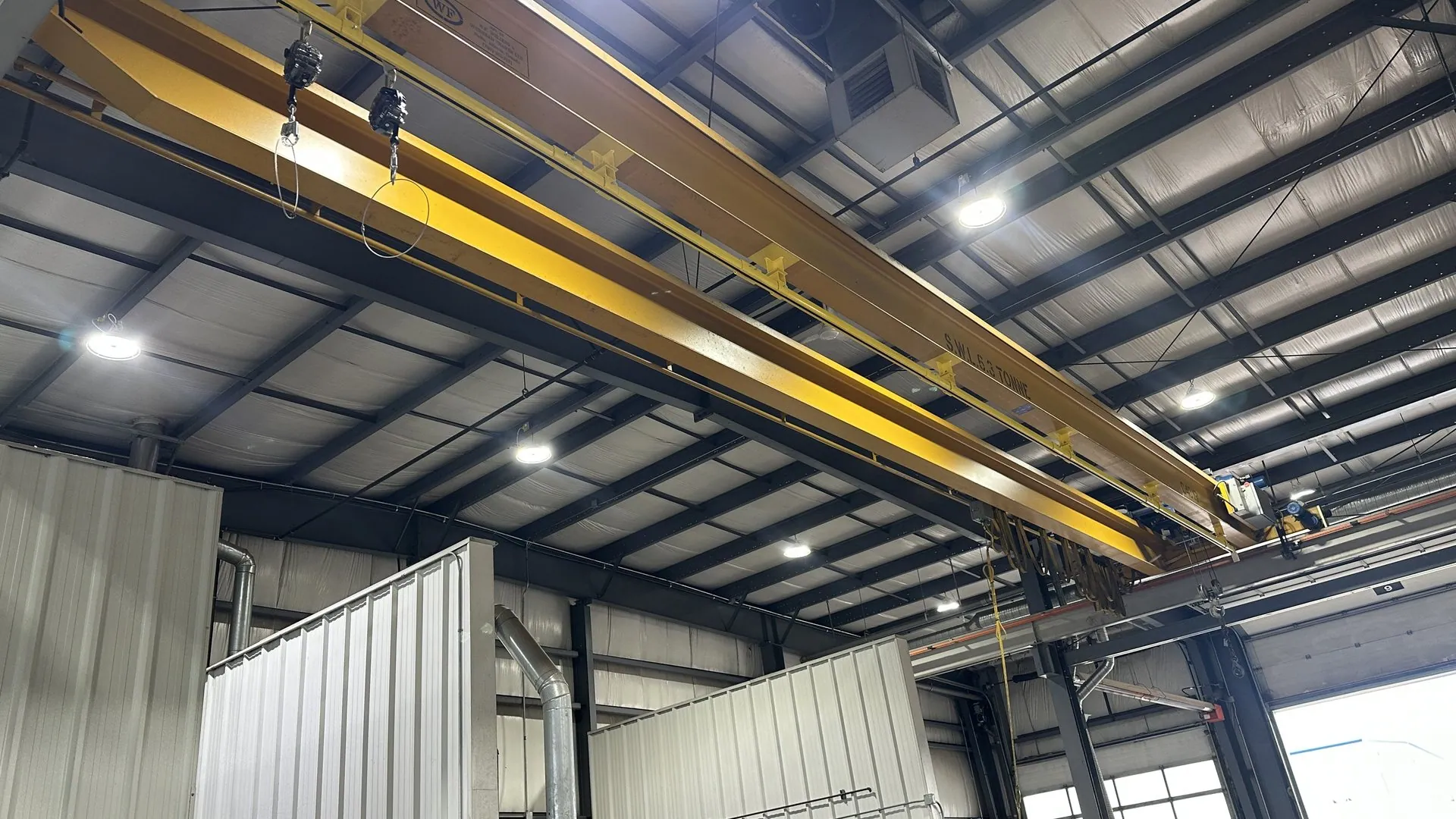
44 ft rigid rail on the non-festoon girder of a 6.3 tonne overhead crane, two trolleys and self-retracting lifelines in position
Case Study
Crane-Mounted Rigid Rail Lifeline for a Heavy Equipment Service Bay — Alberta
A 44 ft engineered rigid rail system hung from an existing overhead crane, so the anchor point travels with the work
The Challenge
A heavy equipment service branch in northern Alberta maintains heavy trucks and equipment in a shop bay served by a 6.3 tonne overhead crane. Technicians climb onto the machines they are working on, which puts them between 6 and 13 feet above the shop floor with no engineered anchor point to tie off to.
Two constraints shaped the solution. The first is that the work moves: the bay is used to lift and reposition heavy assemblies, so a fixed anchor or a lifeline fixed to the building covers only part of where the work actually happens. The second is clearance. With a working surface as low as 6 feet, there is very little room beneath a worker for a fall arrest system to do its job before the worker reaches the floor.
The client needed a single supplier to take the problem from assessment through to a certified, ready-to-use system, without pulling in separate engineering, steel and installation trades.
The Engineered Solution
Tritech recommended hanging the fall protection from the crane itself. A 44 ft rigid rail runs the length of the crane bridge on the non-festoon girder, carried on seven stand-off drops welded to the underside of the beam. Because the rail travels with the crane, the anchor point is always positioned over the work rather than over one fixed spot on the floor, and one system covers the full bay instead of a scatter of individual anchors.
Rigid rail was specified for the clearance, not for convenience. A rigid system holds total fall distance to between 1 ft 11 in and 3 ft 7 in depending on the user’s position, which is what makes fall arrest workable at a 6 ft working height. A cable-based lifeline deflects too far under load to clear the equipment below in this bay.
The system is engineered to CSA Z259.16 for two simultaneous users, rated to 2,700 lb vertical at any point along its length with a factor of safety of 2.0, and the installation drawings carry an Alberta Professional Engineer’s seal. Welding a new load path onto a production crane was handled to CSA W59 by a CWB-certified welder, with Tritech providing a written guarantee that the girder is not weakened by the modification. Rail, hangers and splices are painted safety yellow to match the crane.
Scope of Work
Design, engineering, supply and installation of one (1) 44 ft rigid rail fall arrest system rated for two users, mounted to an existing 6.3 tonne overhead crane. Includes sealed Alberta P.Eng. drawings, field welding by a CWB-certified welder, two 20 ft self-retracting lifelines with trolleys, tagline retrieval equipment, system certification at installation, on-site user training and the operations and maintenance manual. Installed August 2026.
- System
- Rigid Track Lifeline, 44 ft, 2 users
- Application
- Elevated equipment service beneath an overhead crane
- Integration
- Welded to the existing crane bridge, no structural additions to the building
The Result
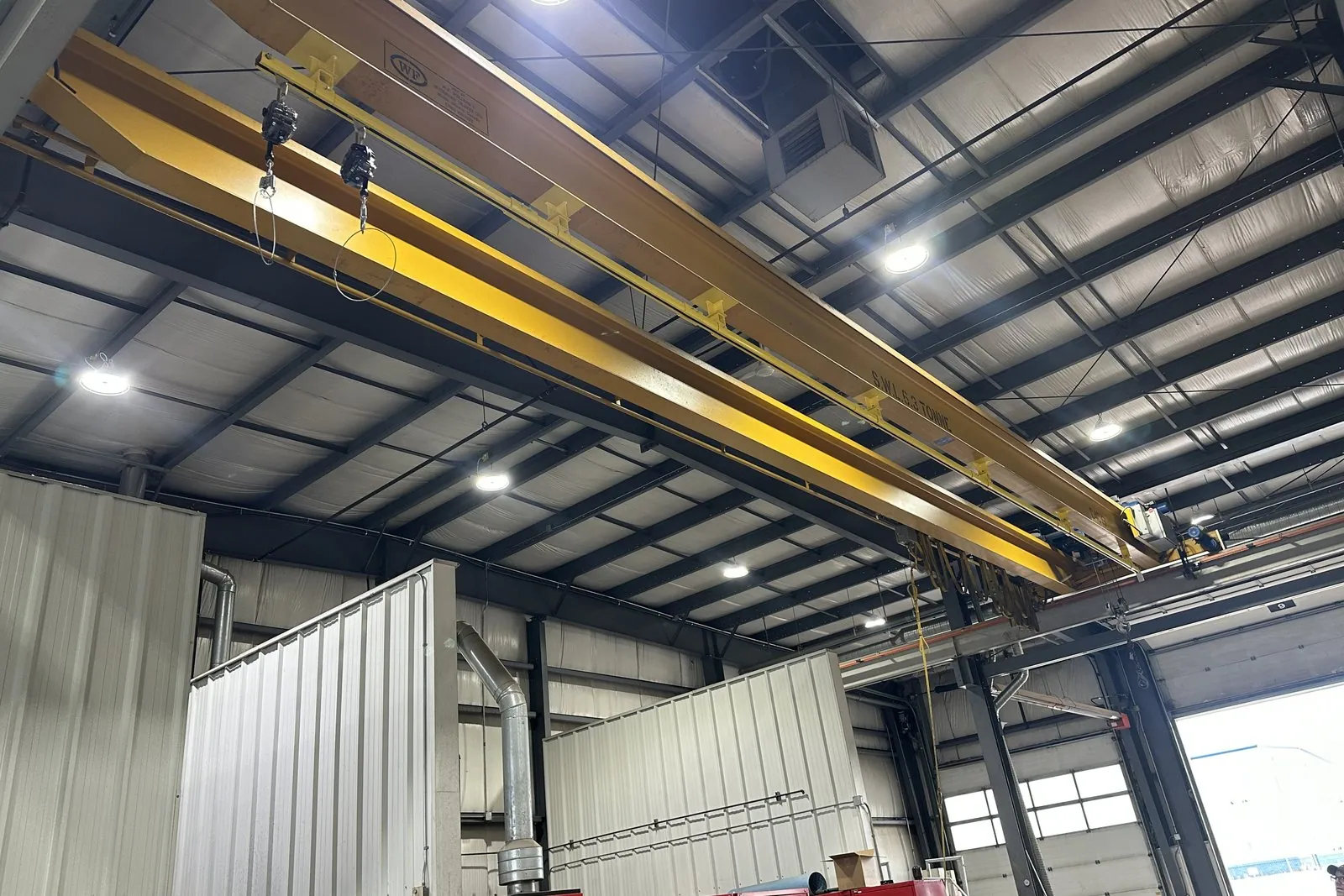
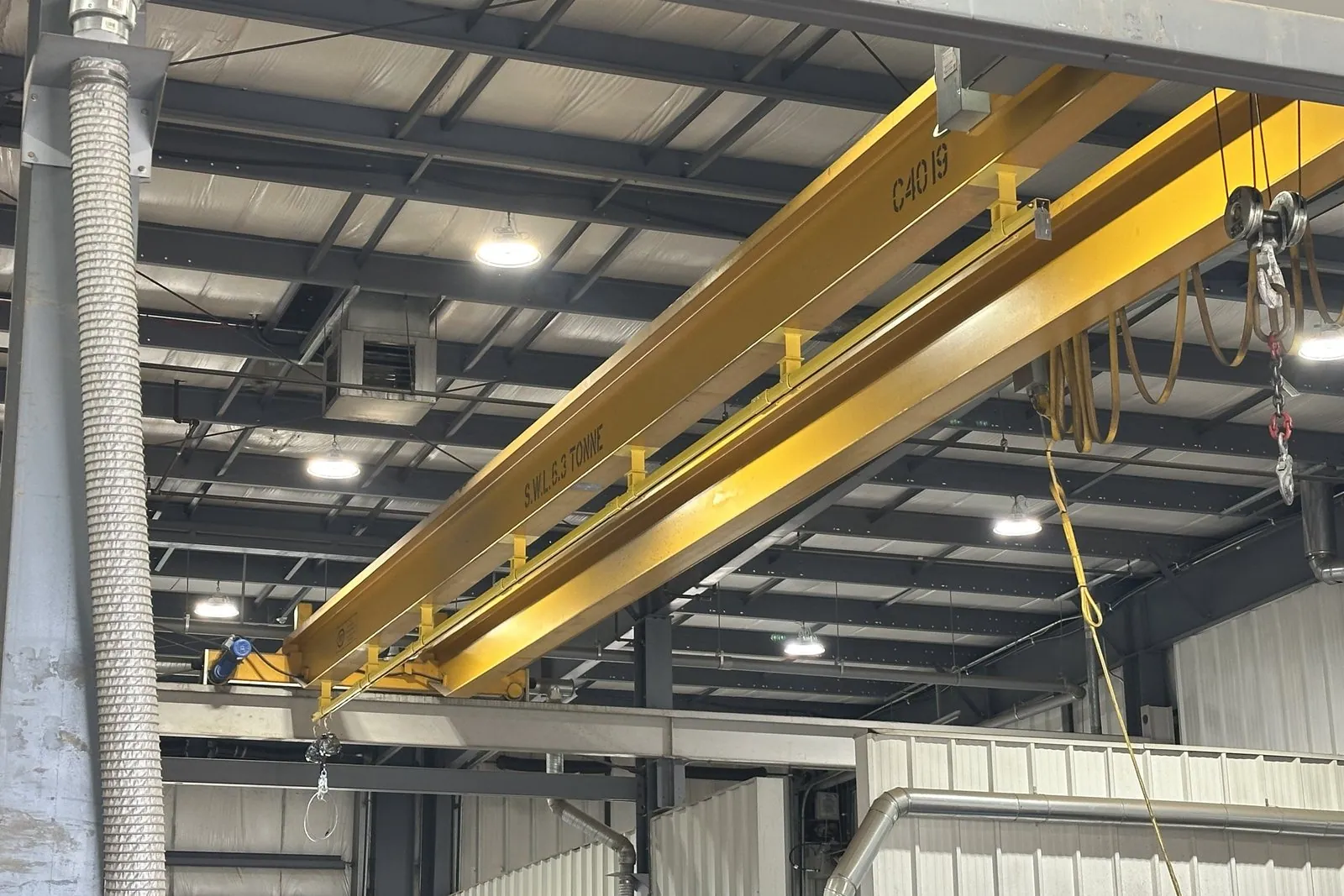
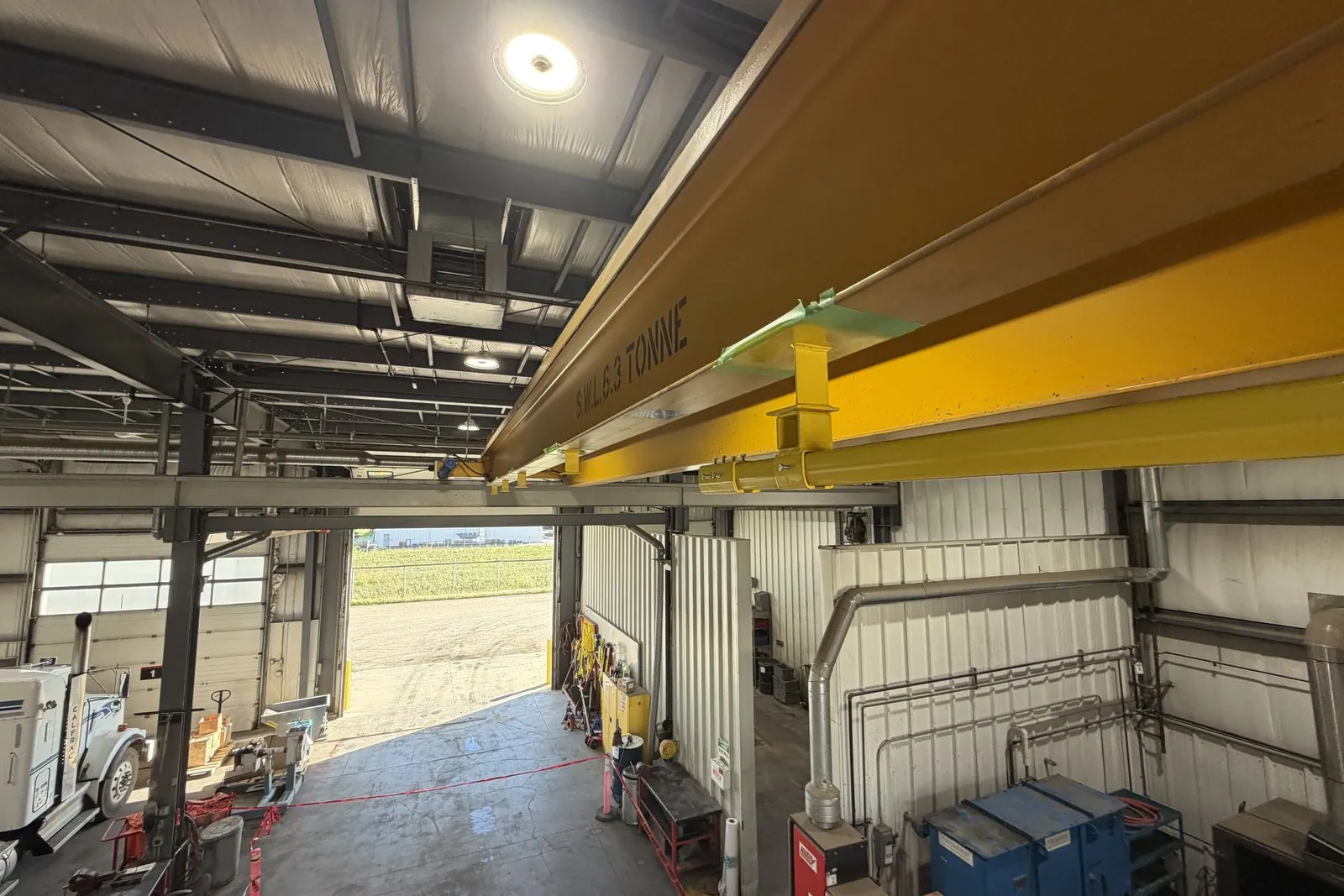
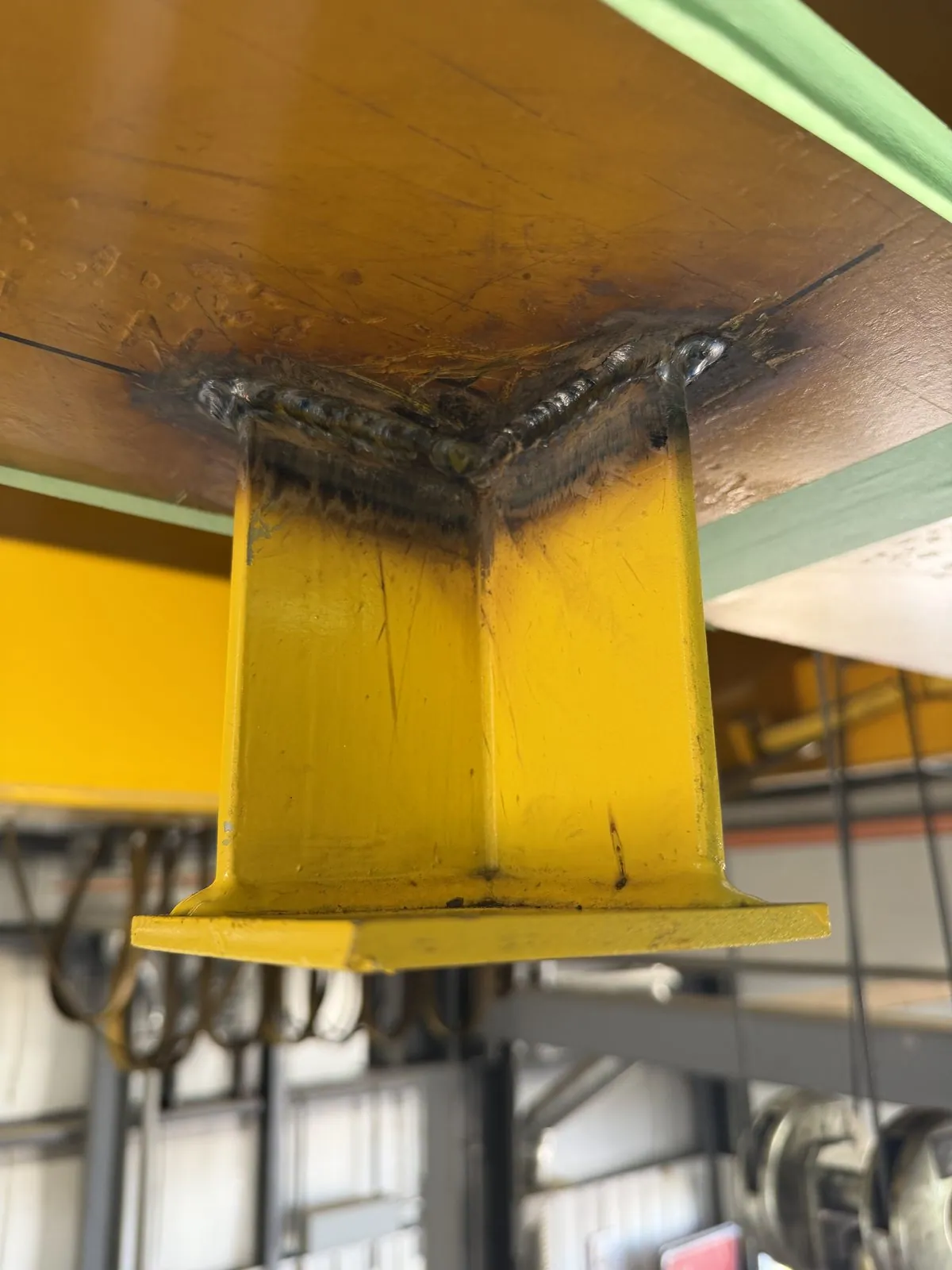
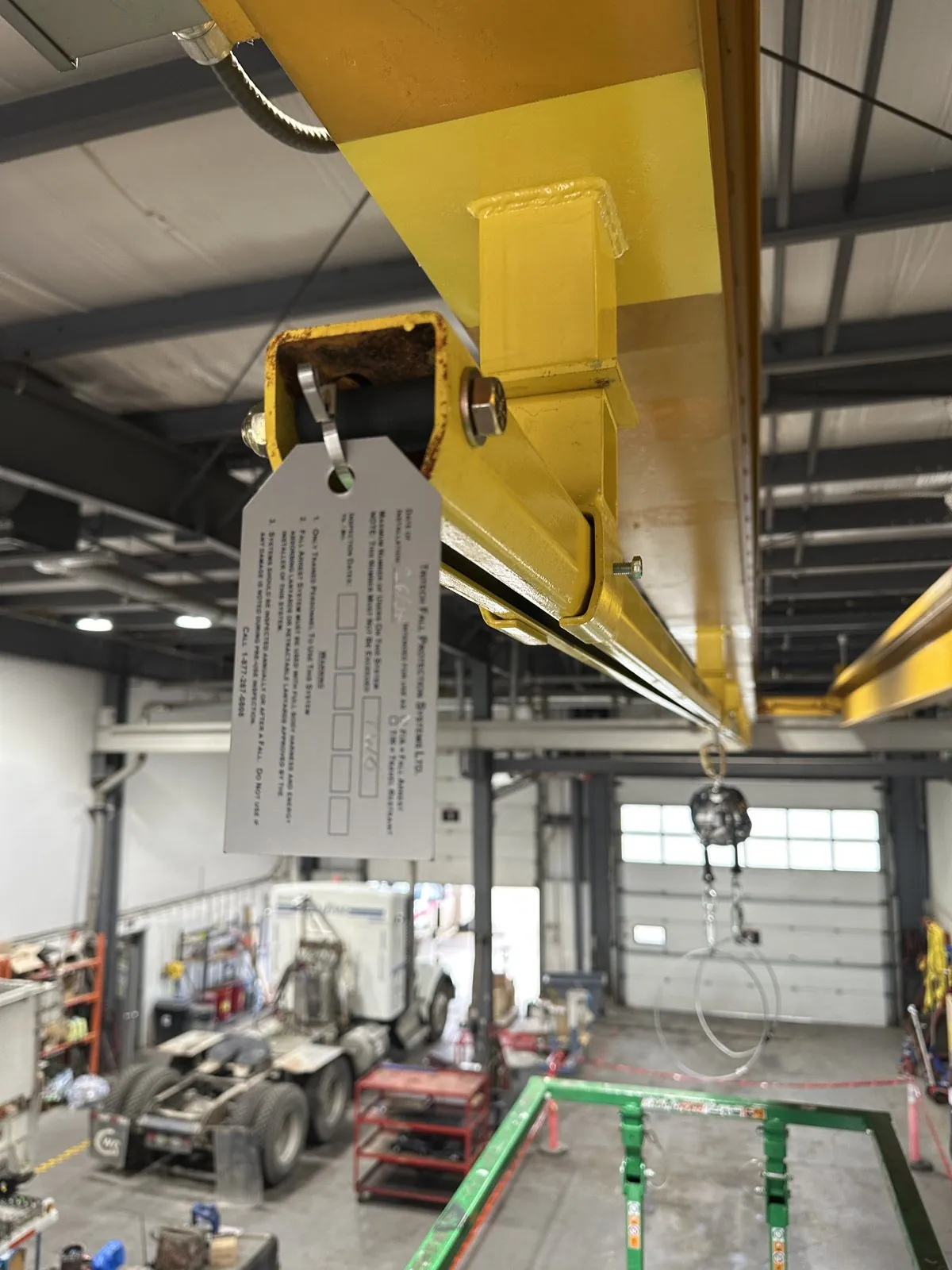
Click any photo to enlarge
Technicians in the bay now have a certified two-user tie-off point that follows the crane along the full length of the work area. The system was installed and handed over in two days on site, with users trained and the equipment demonstrated before the crew left. One field adjustment was made and documented: the rail was shortened 4 ft 4 in at the south end to suit the crane as found, which was resolved on site without a change order or a return visit.
| Outcome | Detail |
|---|---|
| Fall Protection | A 44 ft engineered rigid rail rated for two simultaneous users at 2,700 lb vertical at any point, with a factor of safety of 2.0 |
| Clearance | Total fall distance held to 1 ft 11 in at minimum free fall, which makes compliant fall arrest workable at a 6 ft working surface |
| Coverage That Moves | Mounted to the crane bridge, so the anchor point travels with the work instead of covering one fixed position |
| Compliance | Designed to CSA Z259.16, welded to CSA W59 by a CWB-certified welder, drawings sealed by an Alberta Professional Engineer, system certified at installation |
| Asset Protected | Written guarantee that the welded modification does not damage or weaken the crane girder, with the crane locked out during fall protection use |
| Turnkey Delivery | Assessment, engineering, supply, installation, certification, training and the O&M manual from one supplier, in two days on site |
The Tritech Advantage
The obvious answer to a fall hazard is an anchor where the worker stands. The better answer here was an anchor that moves, and getting to it took engineering rather than a catalogue. Tritech assessed the bay, ran the fall clearance against a 6 ft working surface, designed the rail to the crane’s actual geometry, sealed the drawings, managed the certified welding onto a production asset, installed the system and trained the users. One supplier, one accountability, and a bay that was back in service in two days.
Learn more about Tritech’s fall protection solutions or view more case studies.
Ready to protect your team?
Let’s discuss your project. One partner, from first assessment to annual recertification.
Speak with an Expert