




SOLUTIONS
Crossover Platform System
A Modular, Non-Penetrating Solution for Navigating Obstacles Safely
Clear, Elevated Walkways
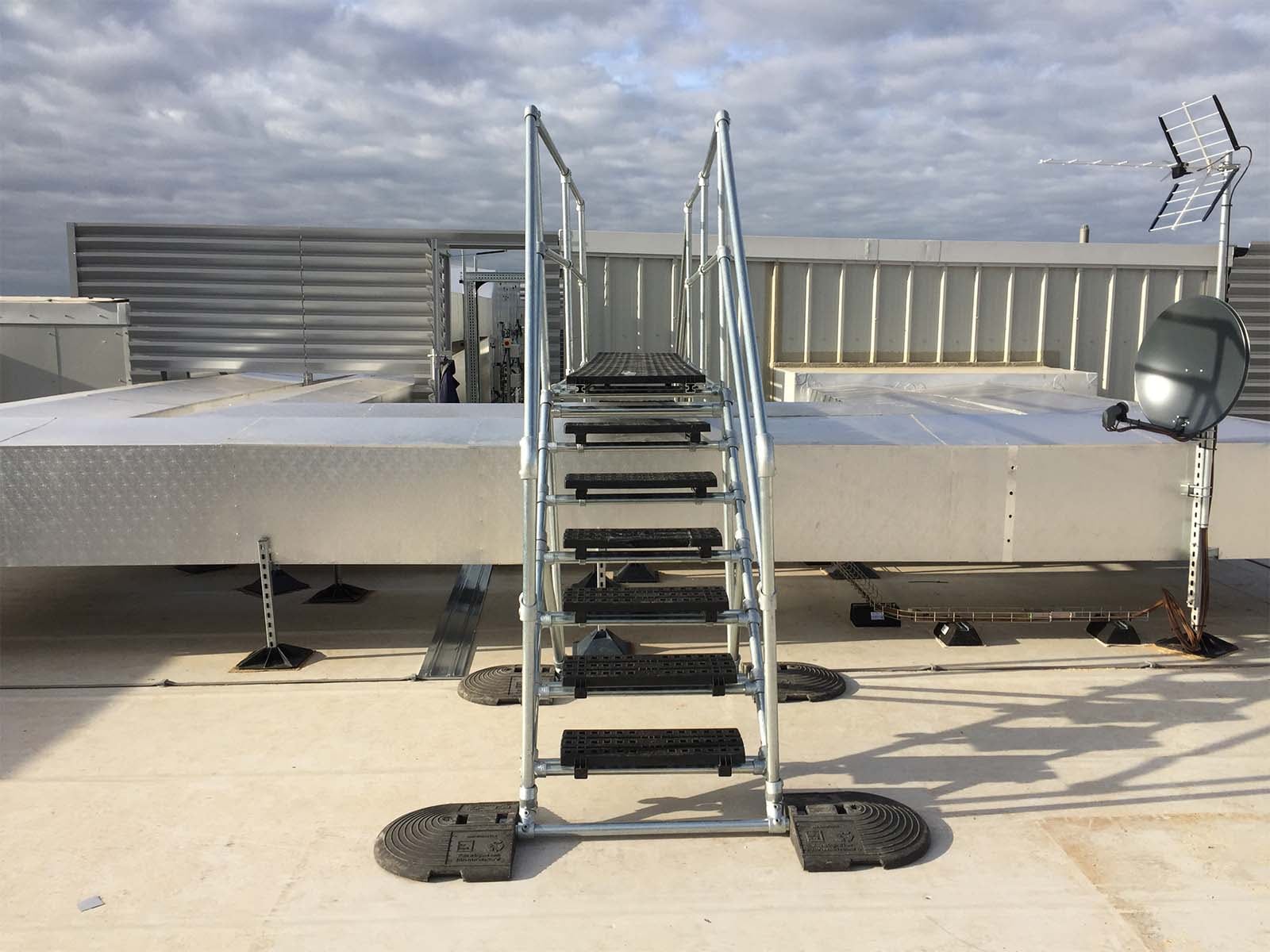
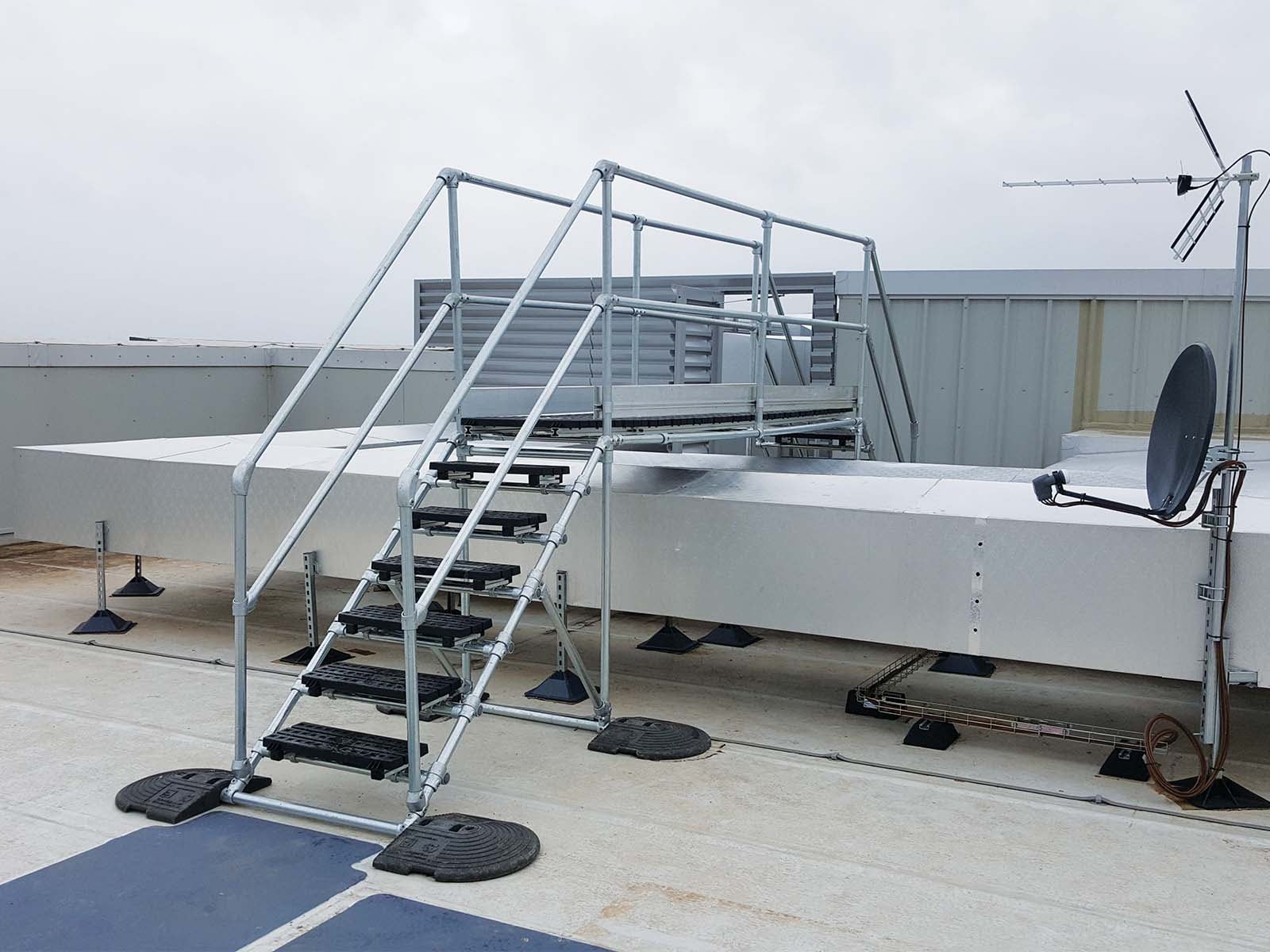
Crossover platforms create a clearly marked path over obstacles, helping workers stay on track and avoid dangerous or uneven spots.
Modular & Easy to Install
These platforms are lightweight, freestanding, and easy to set up with no drilling or welding required—unless deemed necessary for specific site conditions.
Compliant
Designed to include guardrails, non-slip surfaces, and toe boards to meet recognised safety requirements.




PROBLEMS WE SOLVE
Keeping Workers Safe While Navigating Fall Hazards
In workplaces like rooftops, warehouses, or utility areas, there are often pipes, wires, or height changes that workers need to move around. Without a safe way to cross over these, the risk of tripping, falling, or damaging equipment increases. Crossover platforms provide a stable step-over solution, keeping both your people and equipment protected.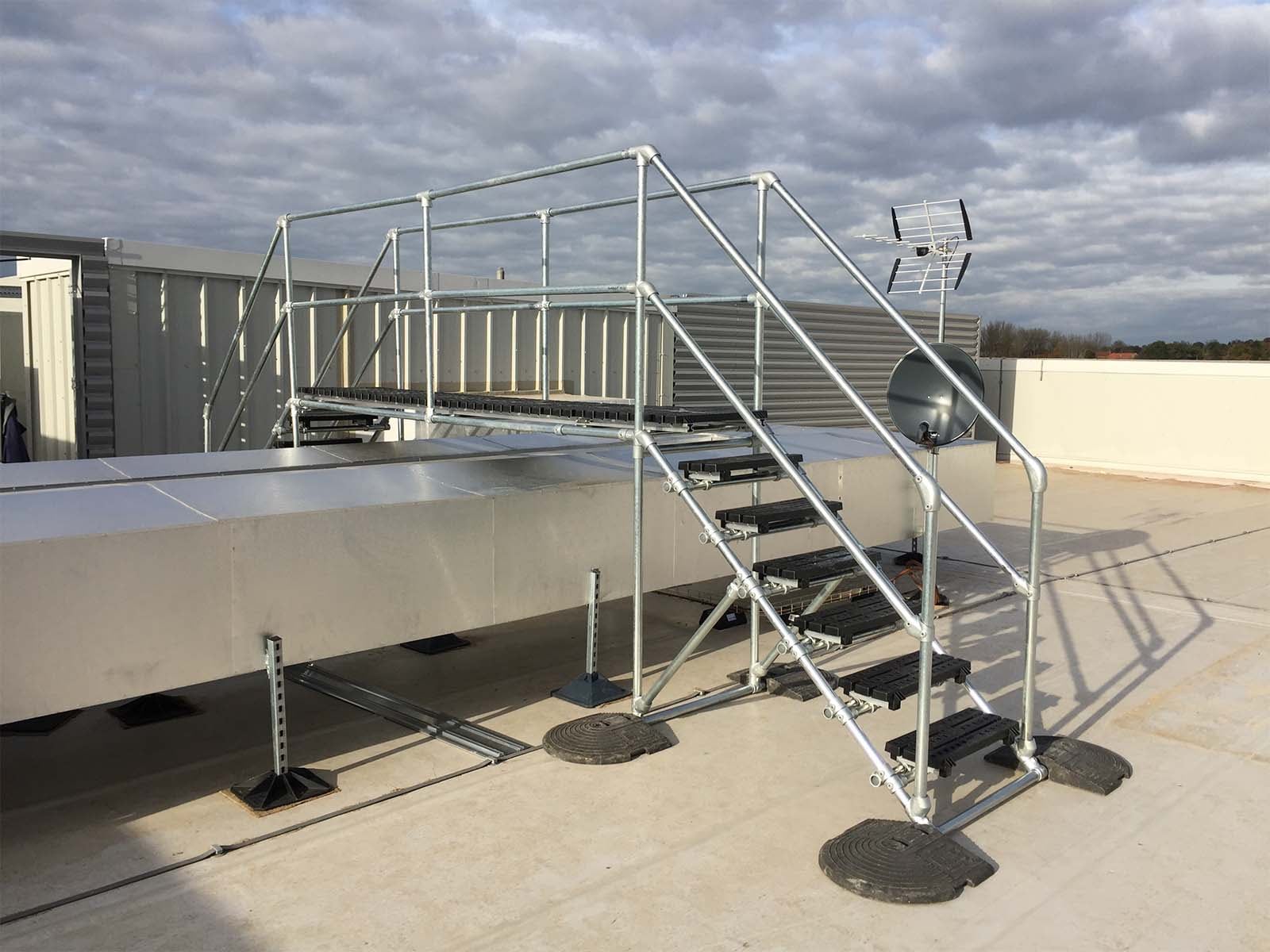
Areas of Application for Crossover Platforms
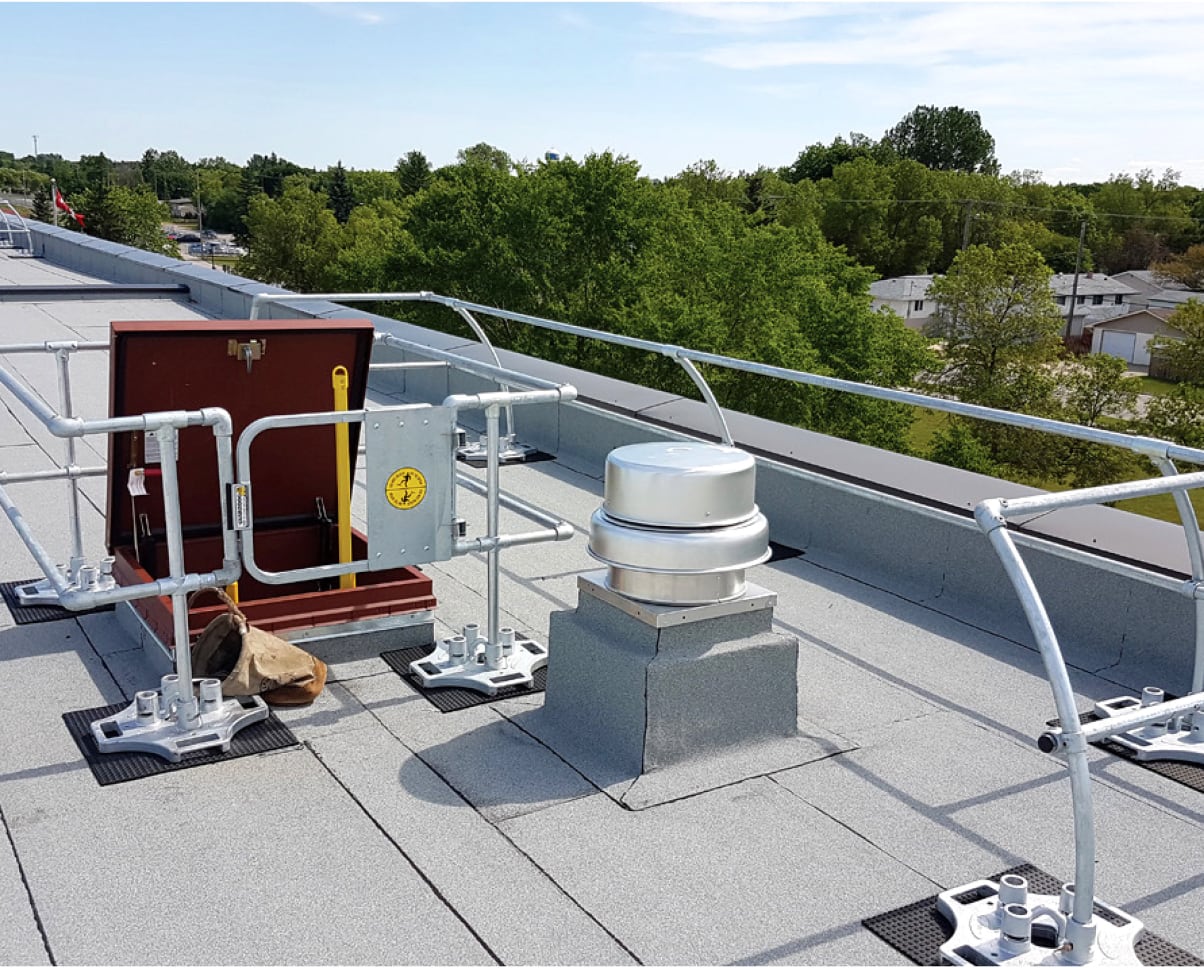
- Rooftop Maintenance & Walkways
- Manufacturing & Industrial Facilities
- Energy & Utilities
- Infrastructure Development
- Government & Military

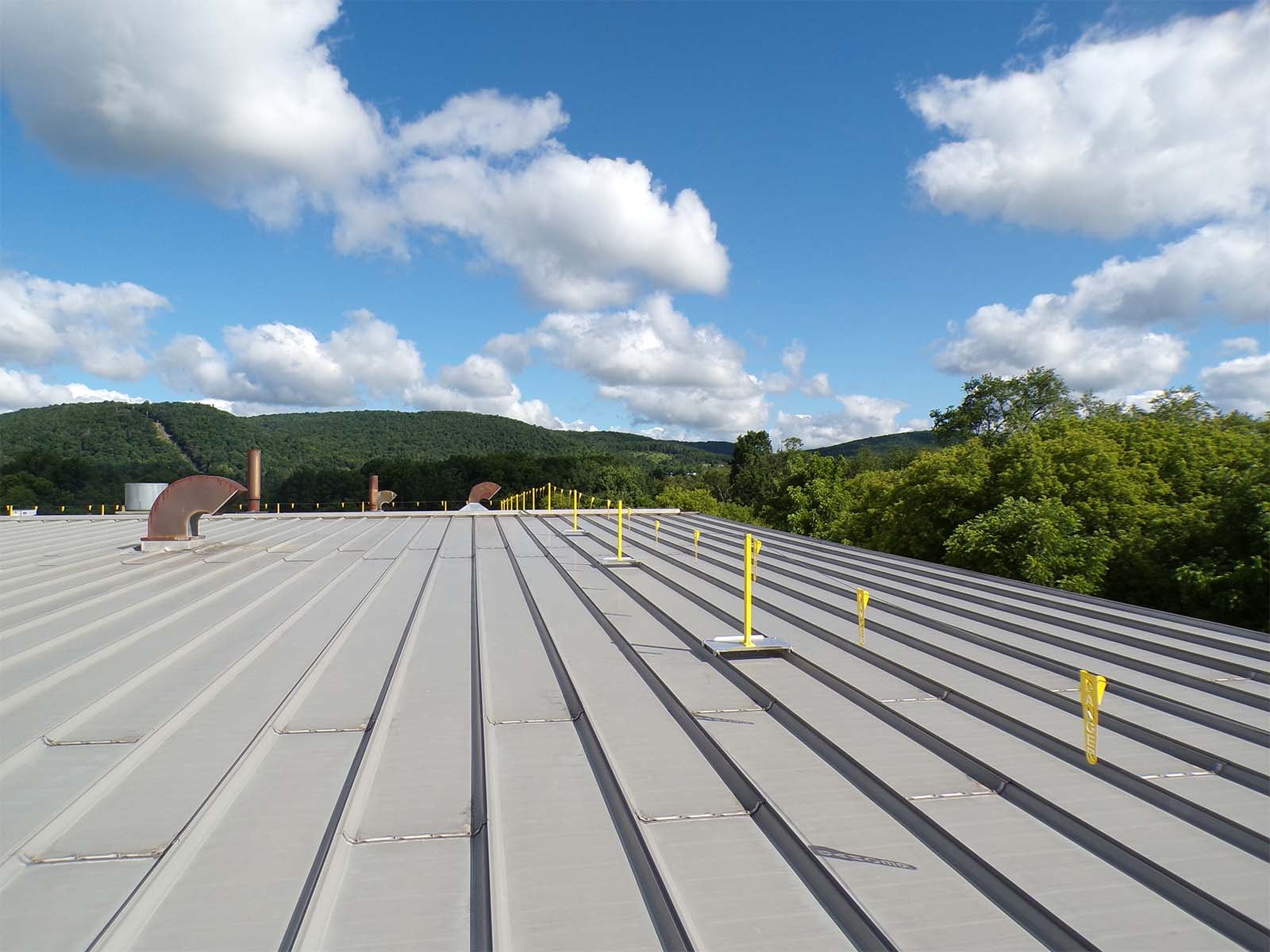
Rooftop Maintenance & Walkways

Manufacturing & Industrial Facilities

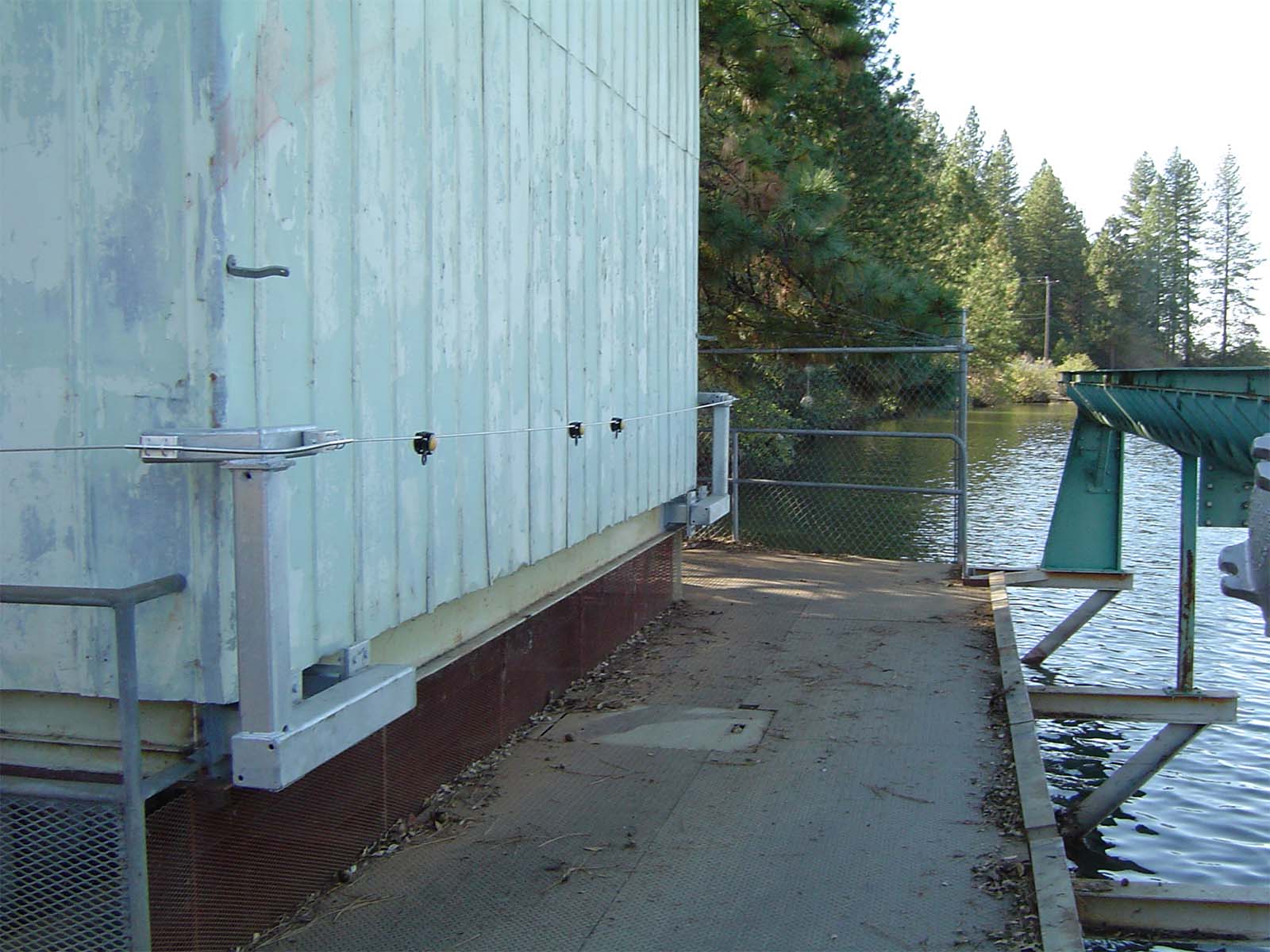
Energy & Utilities
Infrastructure Development

Government & Military

Answers to
Key Questions
-
What is a crossover platform?
A crossover platform is a fixed stair-and-bridge structure that carries workers over rooftop obstructions such as pipe runs, conduit, ductwork, parapets, and changes in roof level. Guardrail on both sides keeps the worker on a compliant walking surface instead of stepping on or over the obstruction, protecting the worker and the equipment underfoot at the same time. Canadian OH&S regulations treat the crossover as part of the workplace’s walking surfaces, so its treads, landings, and rails must meet the requirements of the applicable provincial regulation. Tritech has designed, fabricated, and installed fall protection systems across Canada since 1993, and builds each crossover to the specific obstruction and roof.
-
What are the 4 types of fall protection?
Fall protection is usually grouped by the hierarchy of controls: elimination (remove the hazard or the need to work at height), passive prevention (guardrails, covers, and other physical barriers that need no worker action), active fall restraint or fall arrest (harness-and-anchor systems), and administrative controls (warning lines, training, and procedures). A crossover platform is passive prevention: it removes the exposure at the obstruction without depending on worker action, which is why it sits above harness-based systems in the order an employer should consider. The CSA Z259 series covers the equipment used in the active categories.
-
At what height is fall protection required?
In Canada, the trigger is set by the provincial OH&S regulation, or federally by the Canada Labour Code, Part II and the Canada Occupational Health and Safety Regulations (COHSR), Part XII. A common trigger across most jurisdictions is a fall of 3 metres (about 10 feet), but the exact threshold and attached conditions vary by province and type of work, and several jurisdictions require protection at lower heights for specific work. Ontario construction projects fall under O. Reg. 213/91, Alberta under the OHS Code, Part 9, British Columbia under the OHS Regulation, Part 11, and Québec’s CNESST enforces protection for falls of more than 3 metres. Confirm the governing regulation for the site before relying on any single figure.
CONTACT
Step Over Hazards with a Safe, Custom Crossover Platform
Our team can help you design a modular, compliant crossover system tailored to your site.
Request a Free Estimate
"*" indicates required fields