TL;DR
Canada’s data centre construction market is one of the fastest-growing in the world, with over $3.7 billion CAD in active builds in 2026 alone. From rooftops and elevated cable trays to raised floors, mezzanines, and maintenance platforms, workers face serious fall hazards throughout both construction and day-to-day operations. Canadian fall protection requirements — under the Canada Labour Code and provincial OHS legislation — apply at every stage of the facility lifecycle. Tritech helps protect these environments with engineered guardrails, lifelines, hatch protection, pit covers, anchor systems, and fall hazard assessments.
Canada has quietly become one of the world’s most active data centre construction markets. Fuelled by sovereign AI investment, data residency laws, abundant clean hydroelectric power, and hyperscaler expansion from the United States, Canadian data centre builds are accelerating in every major province. With that growth comes a significant, often underestimated challenge: keeping the workers who build and maintain these facilities safe from fall hazards.
At Tritech Fall Protection, we design and install engineered fall protection systems for facilities across Canada and the United States. This guide is written for safety professionals, EHS managers, general contractors, and facility operators who need to protect their teams and maintain compliance with Canadian fall protection legislation on data centre projects.
Why Canada Is Becoming a Global Data Centre Powerhouse
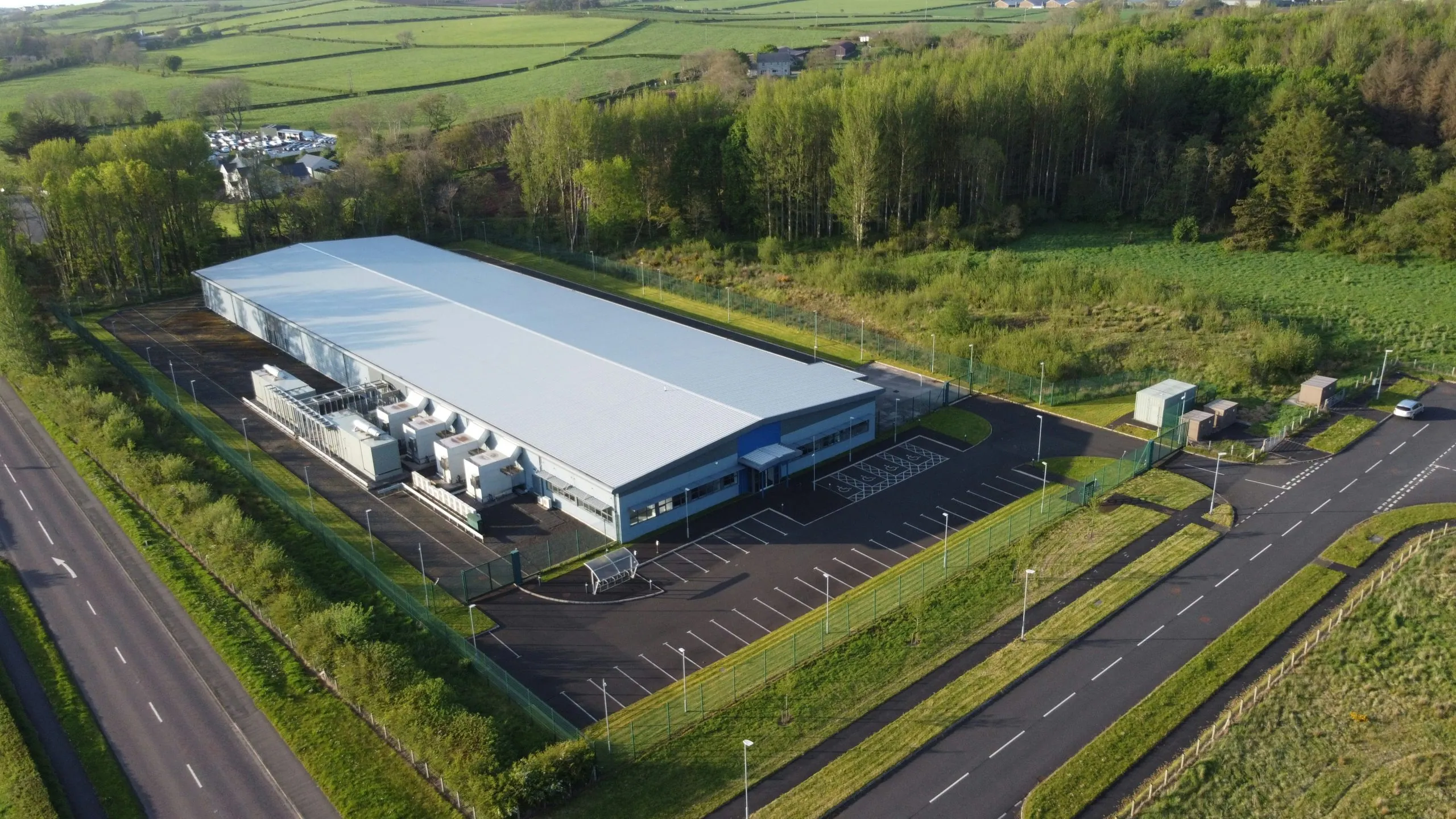
The scale of Canadian data centre investment in 2025 and 2026 is genuinely unprecedented. Canada’s total data centre IT capacity now exceeds 10 GW across operational, under-construction, committed, and early-stage projects — a dramatic shift from steady growth to exponential expansion. Alberta, Ontario, and Quebec collectively account for 93% of national IT load, and all three are seeing significant new construction activity.
The drivers are structural: the federal government’s $2.4 billion CAD sovereign AI compute package, strict data residency requirements that push U.S. enterprises to process regulated information on Canadian soil, and one of the cleanest energy mixes in the world — approximately 60% of Canada’s electricity comes from hydropower. Alberta’s 1.2 GW phased grid-connection framework is accelerating self-build projects, while Quebec’s hydroelectric advantage draws AI training clusters with power costs 40% below the national average. A new 90 MW facility near Calgary — confirmed at $750 million CAD — reflects the scale of investment now flowing into secondary markets like Alberta.
What this means for fall protection: Every one of those projects involves workers at height — on rooftops, elevated catwalks, raised server platforms, and during MEP and structural work. Canada’s multi-jurisdictional OHS framework means safety teams need to understand which regulations apply before the first boot hits the floor.
The Unique Fall Hazards Inside a Canadian Data Centre Build
Data centres are not like a standard warehouse or office build. They combine the scale of industrial facilities with extraordinary technical complexity — raised flooring systems, dense overhead cable trays, high-bay server halls, massive mechanical and electrical rooms, and large flat roofs packed with cooling infrastructure. Each of these elements creates distinct fall hazard profiles that are just as present in a Toronto colocation facility as they are in an Alberta hyperscale campus.
Elevated Cable Tray & Overhead Work
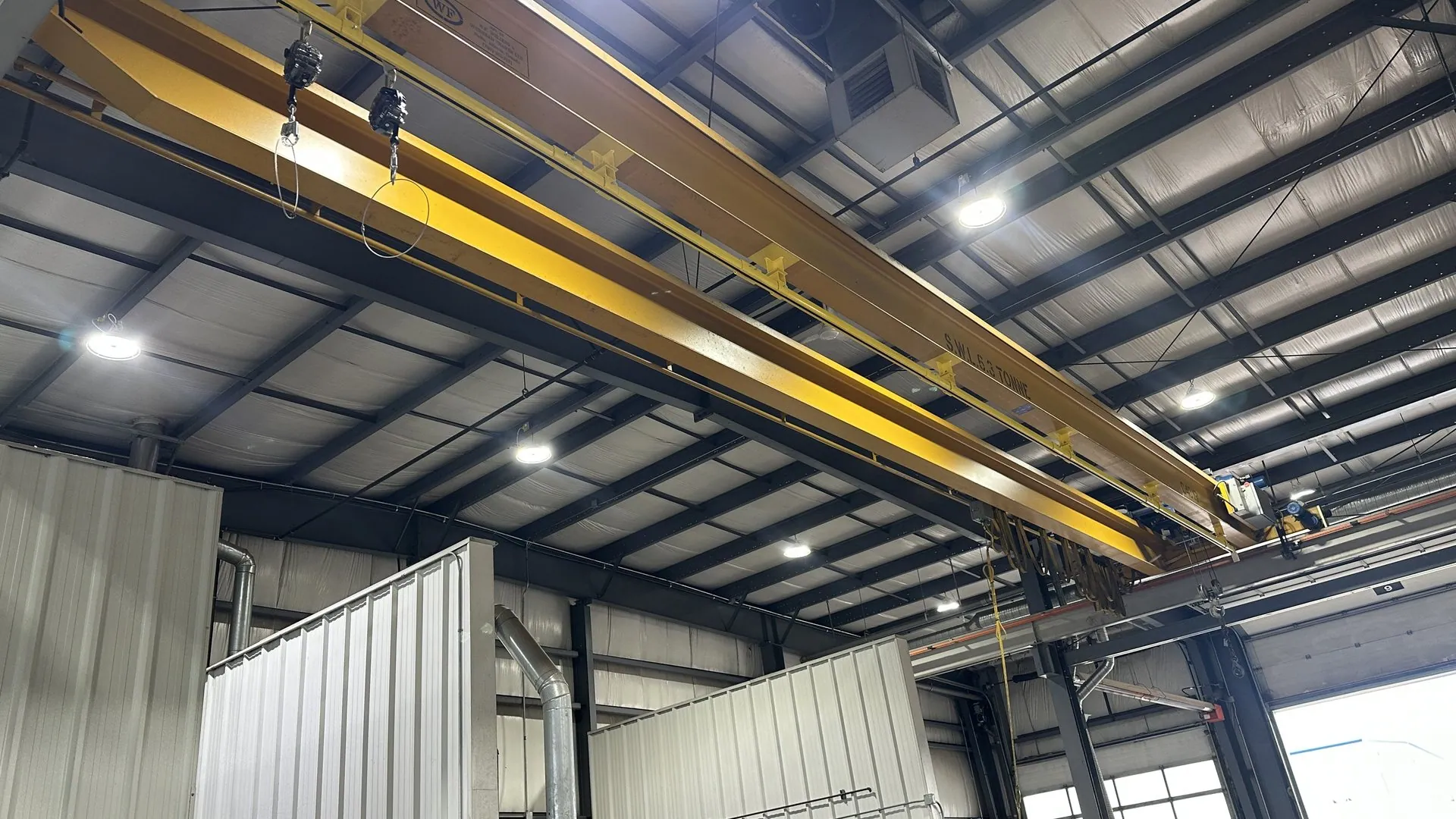
Network and power cabling runs in dense tray systems 4.5 to 9 metres off the floor. Workers installing and maintaining these systems frequently work from ladders or aerial lifts — triggering fall protection requirements under federal and provincial OHS regulations.
Raised Floor Systems & Pit Openings
Raised access floors create sudden drop hazards when panels are removed for cabling or cooling work. Open floor pits are a leading cause of injuries in active data centres during both construction and operations — and are in scope under general industry fall protection requirements.
High-Bay Server Hall Construction
Main server halls can have ceiling heights of 9 metres or more. During structural steel erection, mechanical rough-in, and equipment installation, workers face open-edge fall hazards requiring fully engineered fall arrest systems compliant with CSA Z259 standards.
Generator & UPS Equipment Maintenance
Large diesel generators and UPS systems require periodic maintenance from technicians accessing elevated platforms around unguarded openings. Under Canadian general industry standards, these areas require permanent fall protection — not just during construction.
Multi-Trade Construction Overlap
Canadian data centre builds involve dozens of subcontractors working simultaneously. Under Bill C-45 (the Westray Law), general contractors and building owners carry criminal liability for safety failures. Fall hazards created by one trade directly endanger workers from another — coordinating protection is a critical GC responsibility.
Canadian Fall Protection Requirements for Data Centre Work
Canada has 14 OHS jurisdictions — one federal and one per province and territory — each with its own legislation. Understanding which rules govern your project depends on the nature of the work, the province, and whether the employer falls under federal or provincial jurisdiction. Here is a practical overview of the standards most relevant to data centre construction and operations.
Federal Jurisdiction: Canada Labour Code & COHSR
Federally regulated employers — including telecommunications, banking, and interprovincial transportation — fall under the Canada Occupational Health and Safety Regulations (SOR/86-304), Part 12. These regulations require fall protection equipment and, critically, a written Fall Protection Plan developed in consultation with the workplace safety committee for any work requiring fall protection. The plan must be readily available on site, and every worker at height must be trained on it.
Provincial Construction Standards
Most data centre construction projects fall under provincial OHS construction regulations. The trigger heights vary by province, but the obligation is consistent: workers must be protected, and the responsibility falls on both the employer and the constructor. Key provincial thresholds for construction work include:
Fall Protection Trigger Heights by Province (Construction)
| Province | Height Trigger | Key Legislation |
|---|---|---|
| Alberta | 3 m (general); 1.2 m for permanent work areas | OHS Act & OHS Code, Parts 9 & 23 |
| British Columbia | 3 m | WorkSafeBC OHS Regulation, Part 11 |
| Ontario | 3 m (construction); guardrails required at 2.4 m | OHSA & O. Reg. 213/91, s. 26.1 |
| Quebec | 3 m | LSST & Safety Code for the Construction Industry |
| Saskatchewan | 3 m | OHS Regulations, Part VIII |
| Federal (COHSR) | Any height where fall risk exists (plan required) | SOR/86-304, Part 12 |
Key Canadian Standards for Data Centre Fall Protection
Canada Labour Code, Part II — Federal employer duty to protect workers; enabled by COHSR SOR/86-304
COHSR Part 12 (SOR/86-304) — Fall protection equipment, written fall protection plans, and training requirements for federally regulated workers
Alberta OHS Code, Parts 9 & 23 — Fall protection and scaffolding; written plan required when workers may fall 3 m or more without guardrail protection
Ontario O. Reg. 213/91 — Construction Projects: guardrail systems required at open edges where a fall of 2.4 m or more could occur
WorkSafeBC OHS Regulation, Part 11 — Fall protection; written plan required when workers may fall 7.5 m or more without permanent guardrails
CSA Z259 Series — Industry standard for fall arrest components, horizontal lifelines, anchor systems, and personal fall protection equipment
Bill C-45 (Westray Law) — Criminal liability for organizations and individuals where OHS failures contribute to workplace injury or death
Falls from height are the leading cause of workplace death on Canadian construction sites — and fall protection is the most frequently cited OHS violation in every province. In a high-activity build environment like a data centre, this is not a theoretical risk.
Tritech Fall Protection Solutions for Canadian Data Centres
Tritech engineers and installs fall protection systems across every phase of a data centre’s life cycle — from ground-up construction to facility expansion and ongoing operations in Alberta, Ontario, British Columbia, and beyond. Our solutions are engineered to the specific demands of Canadian data centre environments, including non-penetrating options that protect roof membranes in climates that see freeze-thaw cycles and heavy snow loads.
Non-Penetrating Roof Guardrail Systems
Data centre roofs can’t tolerate penetrations that void warranties or allow water ingress — especially in Canadian climates where freeze-thaw cycles amplify any breach. Our ballasted, non-penetrating guardrail systems provide compliant perimeter protection without a single hole in the roof. Ideal for perimeter edges, rooftop HVAC and cooling units, roof hatches, and skylights.
Horizontal Lifeline Systems for Overhead Work
For cable tray installation, overhead MEP work, and server hall maintenance, horizontal lifeline systems provide continuous worker mobility while maintaining 100% tie-off. Our systems are engineered to CSA Z259.13 and designed around the structural members of your specific facility.
Roof Hatch Guardrail & Self-Closing Safety Gates
Every roof access hatch is a fall hazard. Our roof hatch guardrail systems with self-closing gates ensure workers can’t step off the ladder onto an unprotected roof edge — a requirement for any data centre with regular rooftop maintenance activity, and a direct obligation under provincial OHS regulations.
Pit Covers & Floor Opening Protection
Raised floor systems and equipment pit openings require robust, load-rated covers that don’t shift underfoot. Tritech pit covers are custom-fabricated to the exact dimensions of your openings and rated for the foot traffic and equipment loads in your facility — meeting both construction and general industry requirements.
Mezzanine Gates & Elevated Platform Systems
Data centre mezzanine levels require self-closing safety gates at ladder access points and guardrail systems along all open edges. Tritech provides complete mezzanine fall protection packages including gates, guardrail, and custom stair systems — engineered to provincial OHS specifications.
Construction-Phase Fall Arrest Anchor Systems
During construction, certified engineered anchor points are essential for workers performing steel erection, roofing, and elevated MEP work. Tritech designs and installs temporary and permanent anchor systems certified to CSA Z259.15 (anchorage connectors) and aligned with provincial fall protection requirements across Canada.
Ongoing Operations: Fall Protection Beyond Construction
One of the most common oversights we see when assessing Canadian data centre facilities is fall protection that was installed for construction but never updated for the operational phase. Once a data centre goes live, general industry OHS standards apply — and in most provinces, the trigger heights are lower than they are during construction. Alberta’s OHS Code, for example, requires fall protection at just 1.2 metres for permanent work areas, catching mezzanines, loading docks, and elevated workstations that may not have been in scope during the build.
Ongoing fall hazard scenarios in an operating data centre include rooftop cooling equipment servicing, overhead cable tray maintenance as networks expand, raised floor access during equipment refresh cycles, generator testing and maintenance, and facade access for building repairs. Each of these scenarios involves workers at height on a recurring basis — and each one requires permanent, inspected, compliant fall protection.
Tritech offers Fall Hazard Assessment Services specifically designed to identify every fall exposure in an operating facility across any Canadian province and provide a clear, OHS-compliant remediation plan — without disrupting your operations.
We also provide inspection and recertification services for existing systems — critical for any data centre that has grown or changed since its original fall protection installation. Annual inspections keep your systems certified to CSA Z259 standards, satisfy provincial inspection requirements, and minimize liability exposure under Bill C-45.
Protect Your Canadian Data Centre Workers — Before You Need To
Whether you’re a GC breaking ground on a new hyperscale facility in Alberta or an EHS manager at an operating campus in Ontario or BC, Tritech has the expertise to build a compliant fall protection program around your specific environment and provincial requirements.