SOLUTIONS
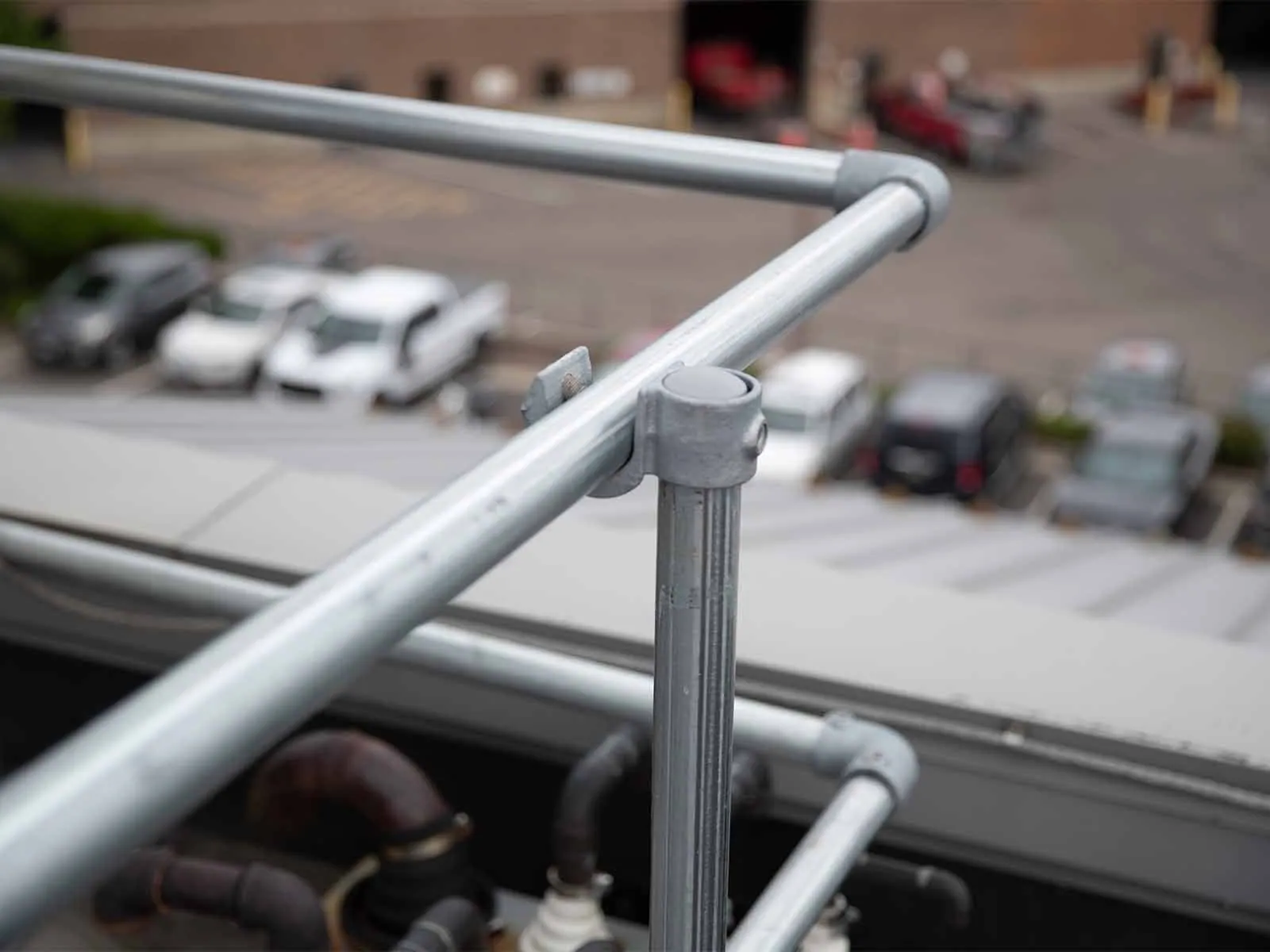
Freestanding Roof Guardrail
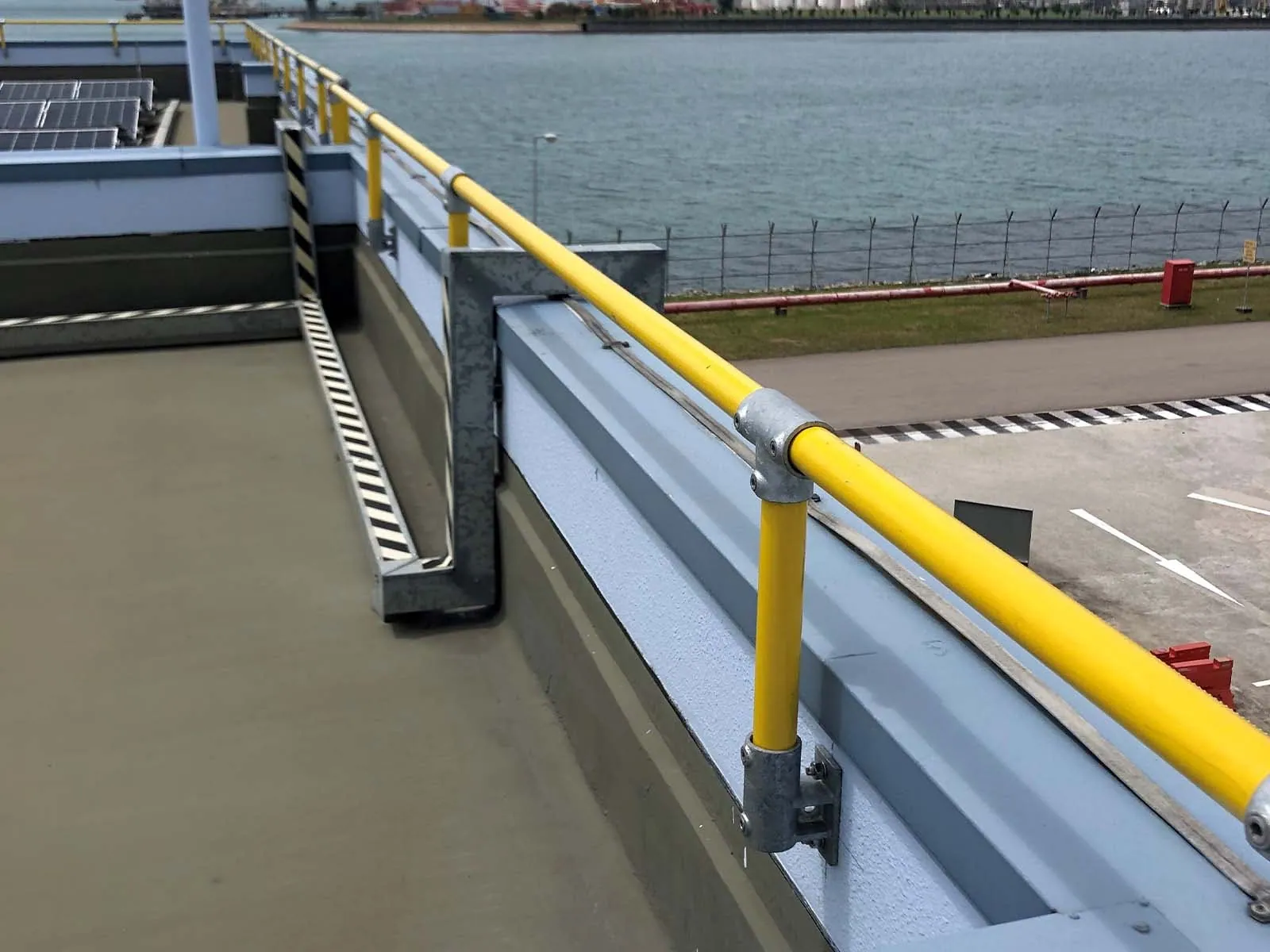
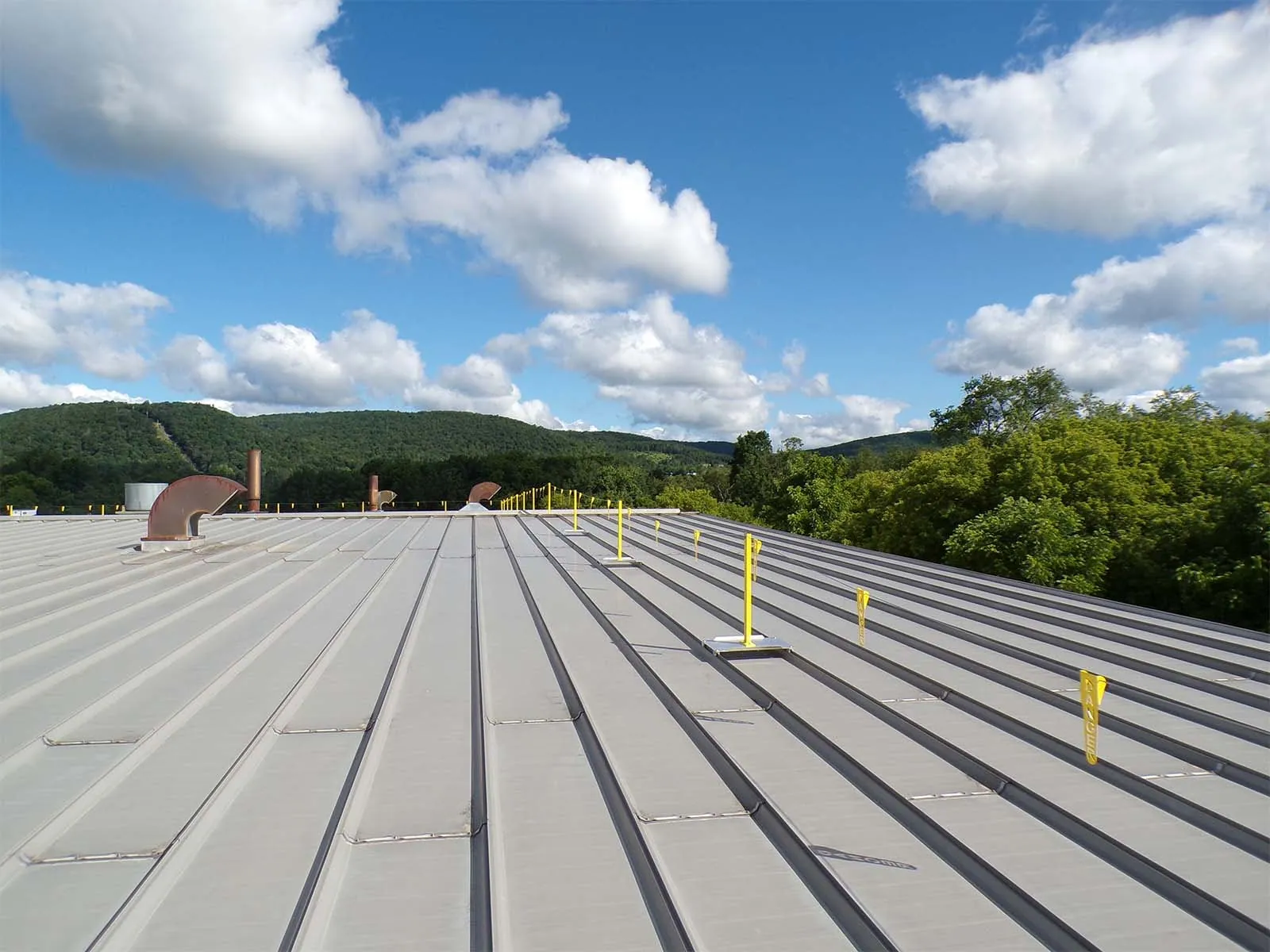
A Weighted-Base Guardrail System that Guarantees Modular and Code-Compliant Rooftop Safety
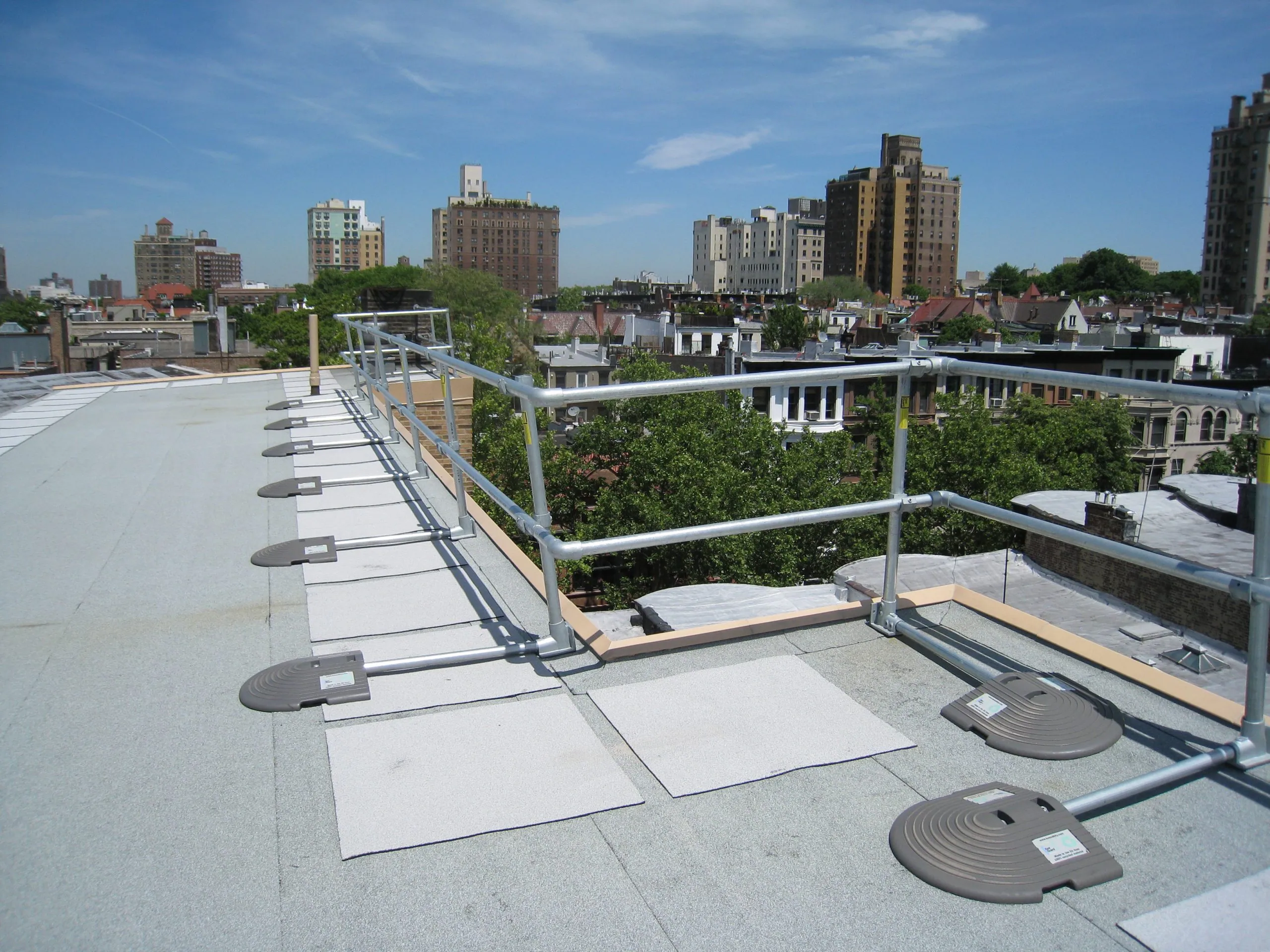
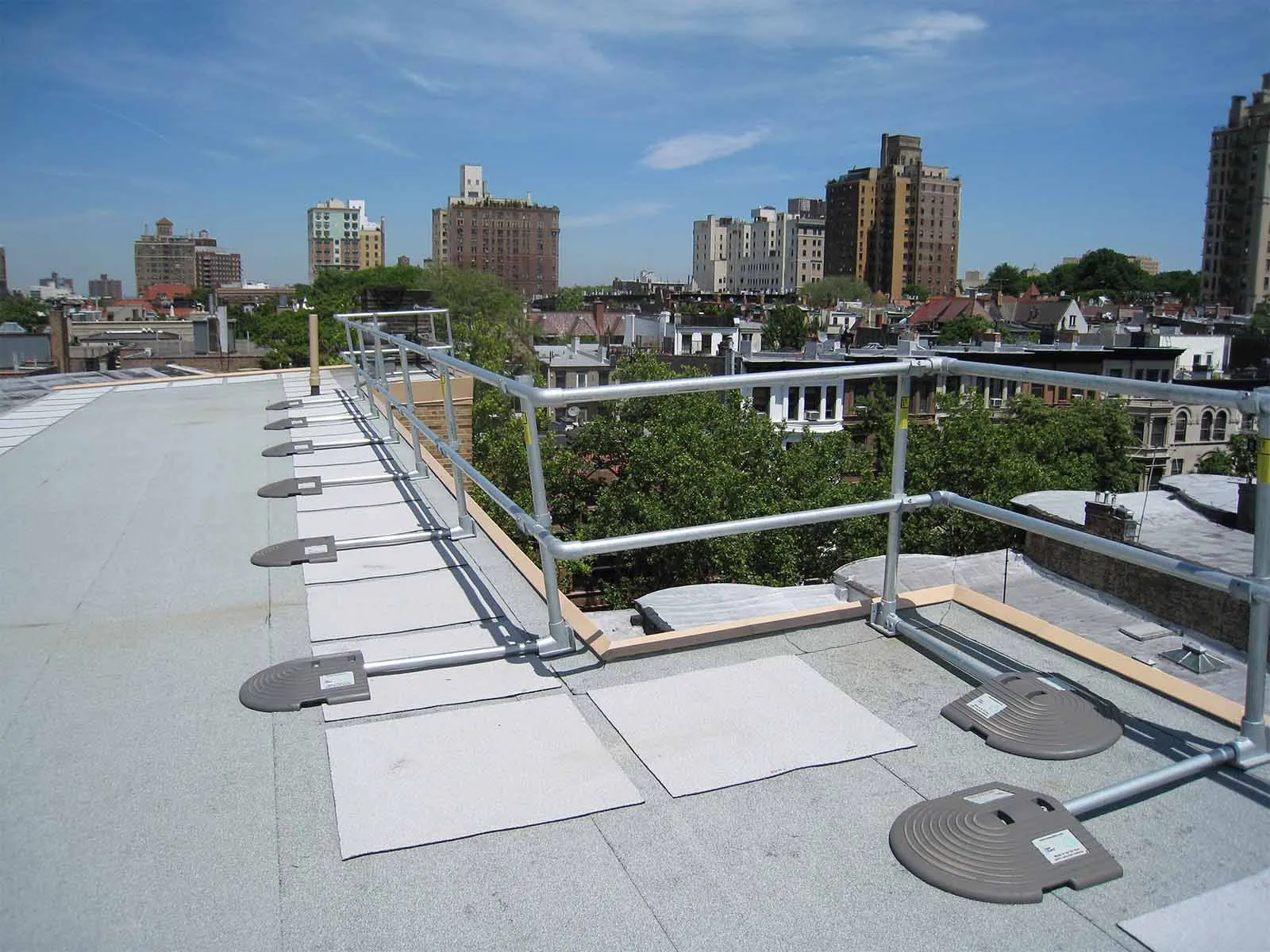
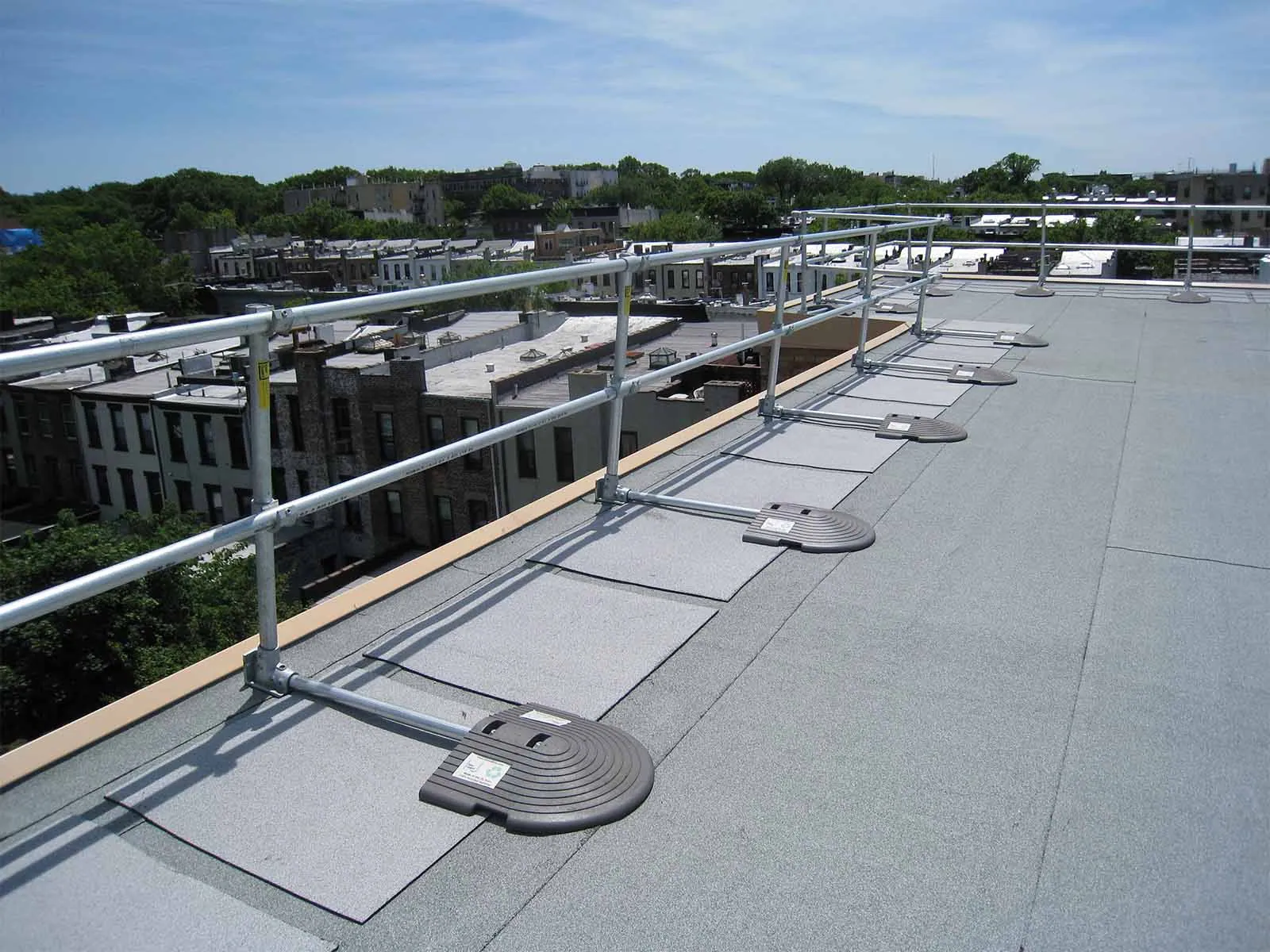
Non-Penetrating Design
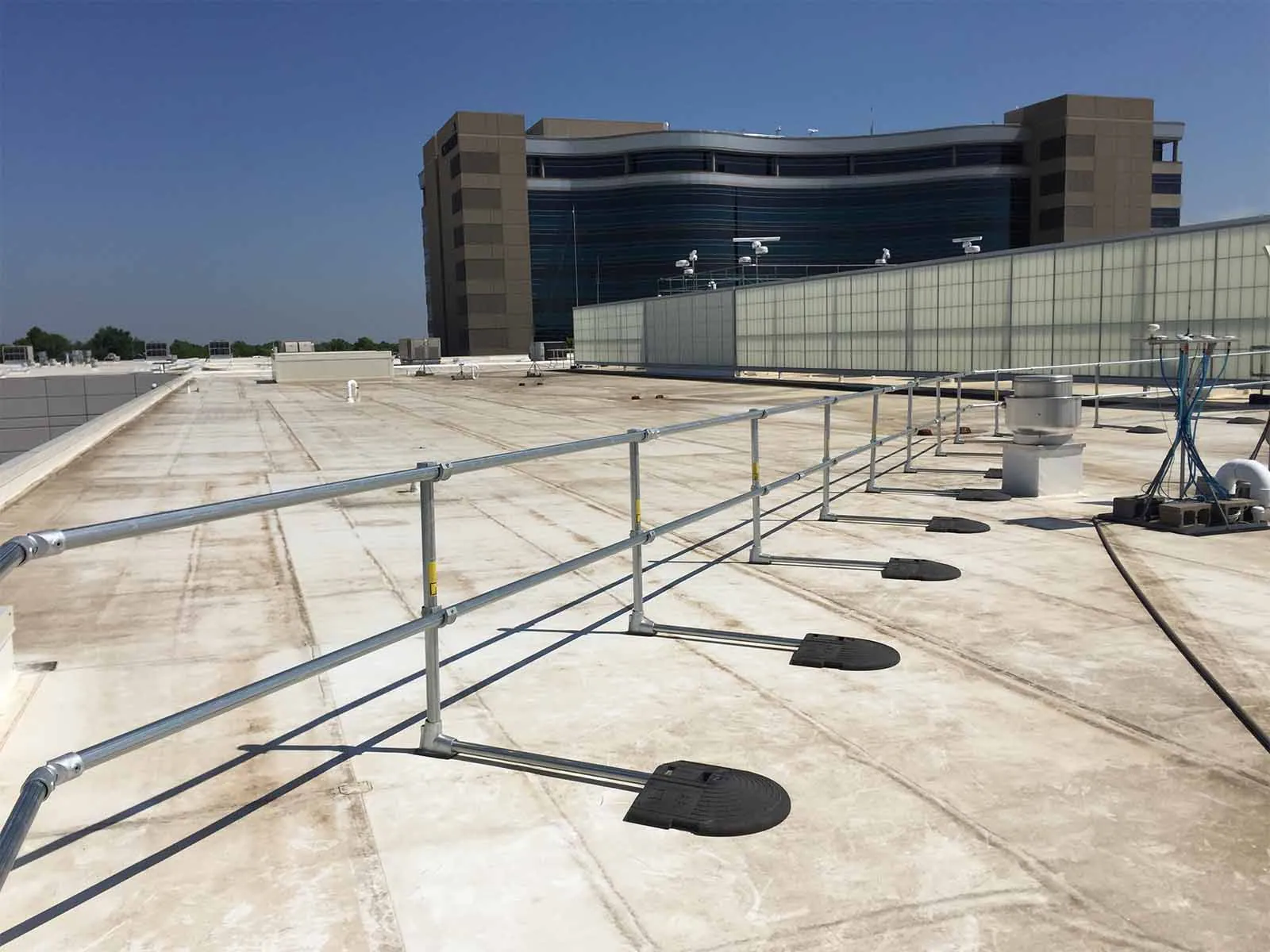
The system utilizes counterweighted base supports, eliminating the need for roof drilling or any mechanical fasteners like screws, nuts, bolts etc. This preserves roof warranties and prevents water leakage.
Modular & Expandable
Freestanding roof guardrails are fully modular, allowing easy expansion or reconfiguration to accommodate any roof layout. They provide a flexible safety solution suitable for flat or low-slope roofs up to 5°.
Code-Compliant
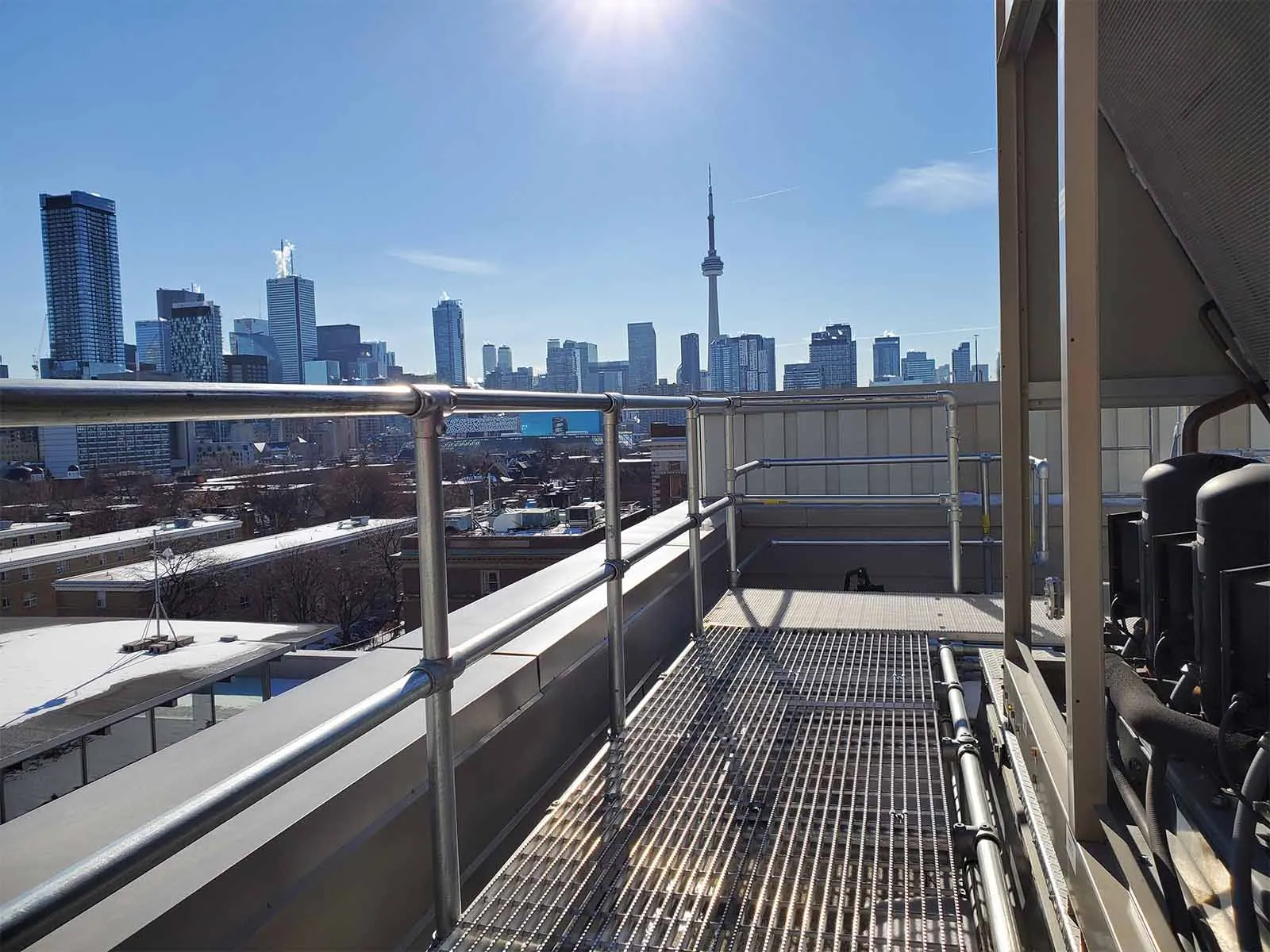
Manufactured with galvanized steel or aluminum, the system meets and exceeds federal and provincial requirements for fall protection.
PROBLEMS WE SOLVE
How Freestanding Roof Guardrail Systems Work
Freestanding roof guardrail systems use counterweighted base supports to resist applied loads without mechanical attachment to the roof structure. The system relies on engineered ballast distribution and guardrail height requirements to create a stable protective barrier along roof edges and access points. Because the system does not penetrate the roof membrane, it helps preserve roof warranties while maintaining compliance with Canadian fall protection regulations.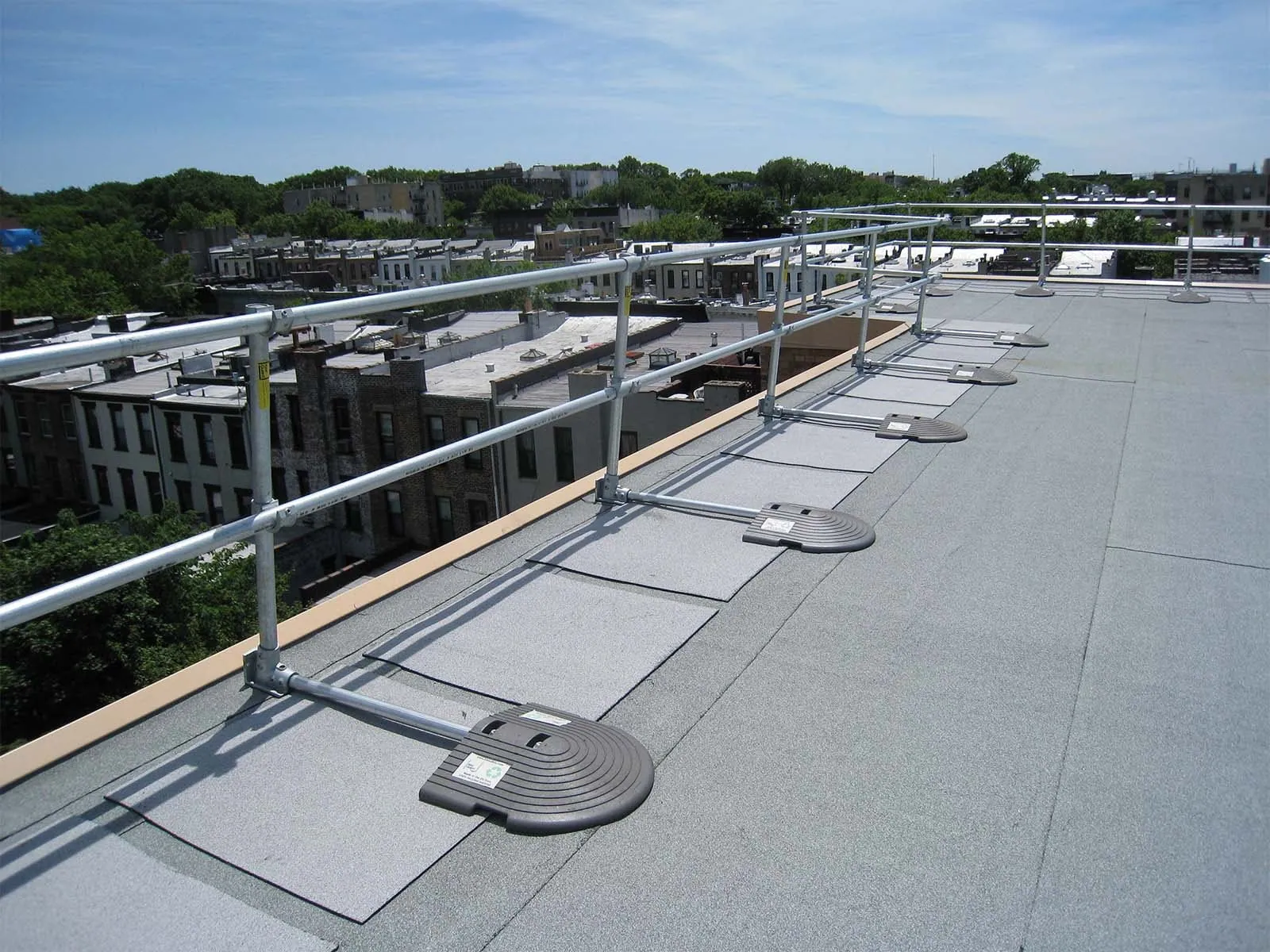
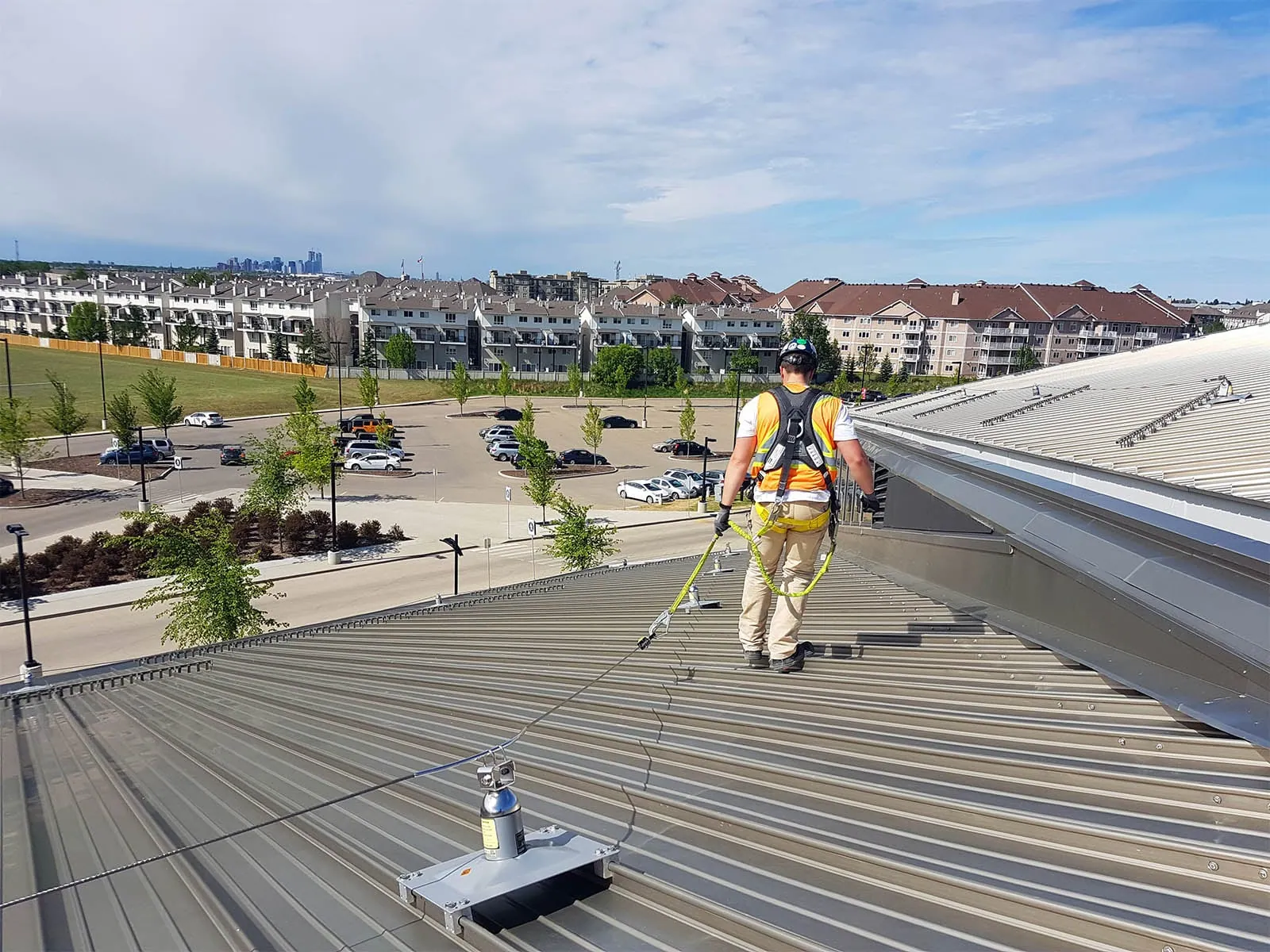
Areas of Application for Freestanding Roof Guardrails
- Building Access & Maintenance
- Energy & Utilities
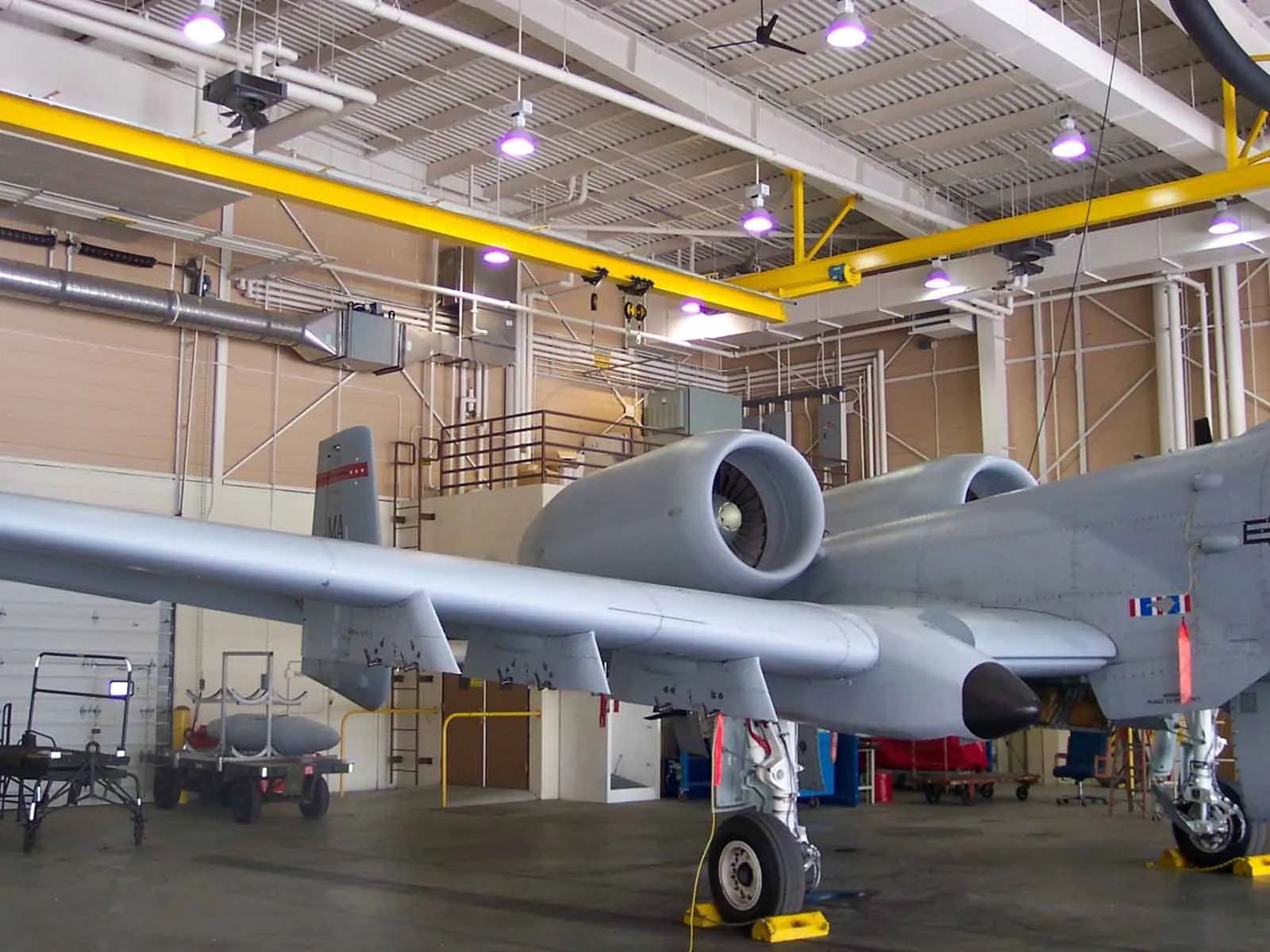
- Government & Military
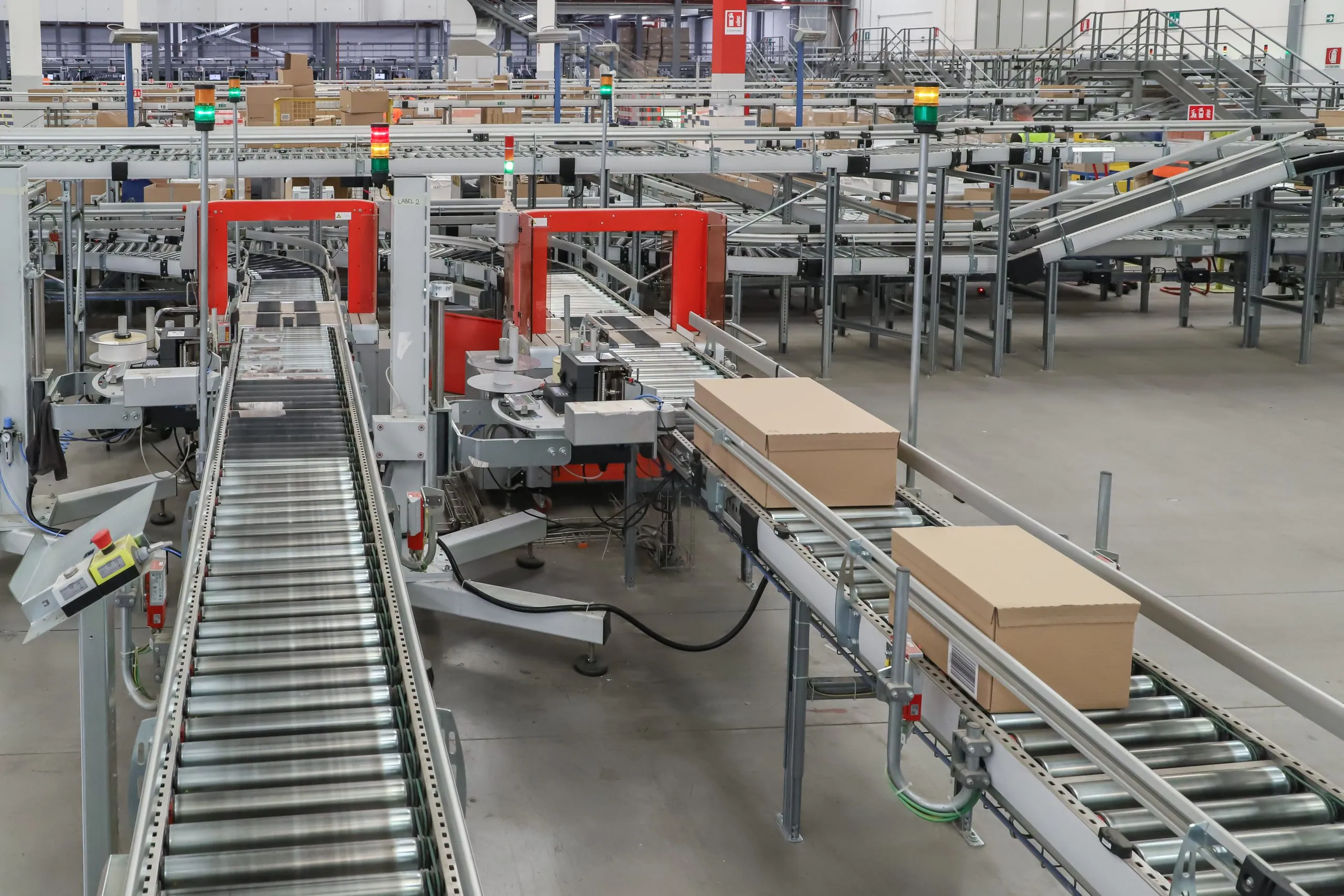
- Manufacturing
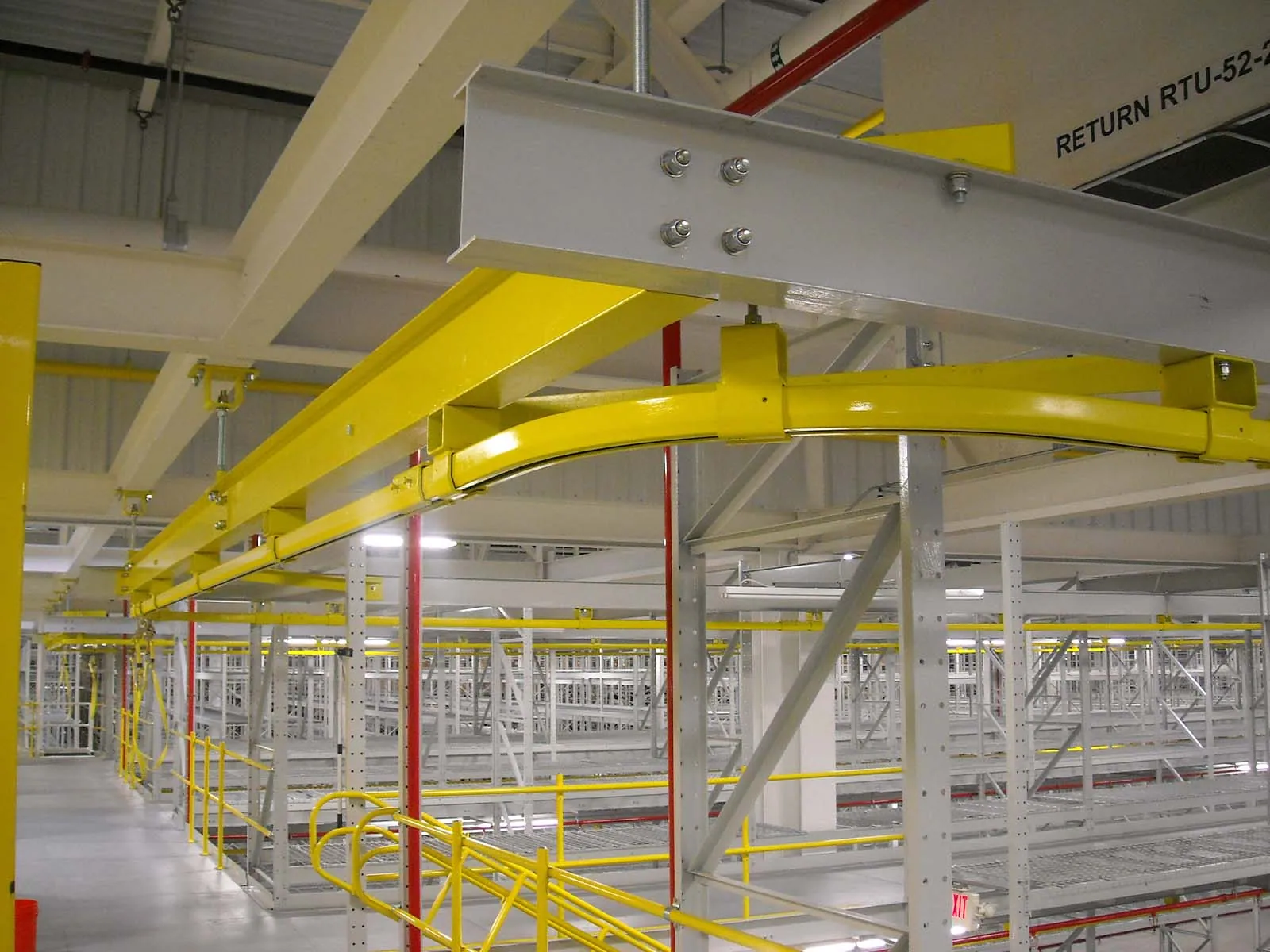
- Warehouses & Distribution Centers
Building Access & Maintenance

Energy & Utilities
Government & Military
Manufacturing
Warehouses & Distribution Centers
Answers to
Key Questions
At what height are guardrails required in Canada?
Canada sets guardrail and fall protection triggers provincially, so there is no single national height. The most common trigger is a fall of 3 metres (about 10 feet): Ontario construction projects are governed by O. Reg. 213/91, Alberta by OHS Code Part 9, British Columbia by OHS Regulation Part 11, and Québec’s CNESST enforces protection for falls of more than 3 metres. Several jurisdictions require protection at lower heights for specific work, and federally regulated workplaces follow the Canada Labour Code, Part II and COHSR Part XII. Tritech designs, installs, and recertifies guardrail across Canada and confirms the governing trigger for each site, starting with a Fall Hazard Assessment.
Are guardrails required at roof hatches?
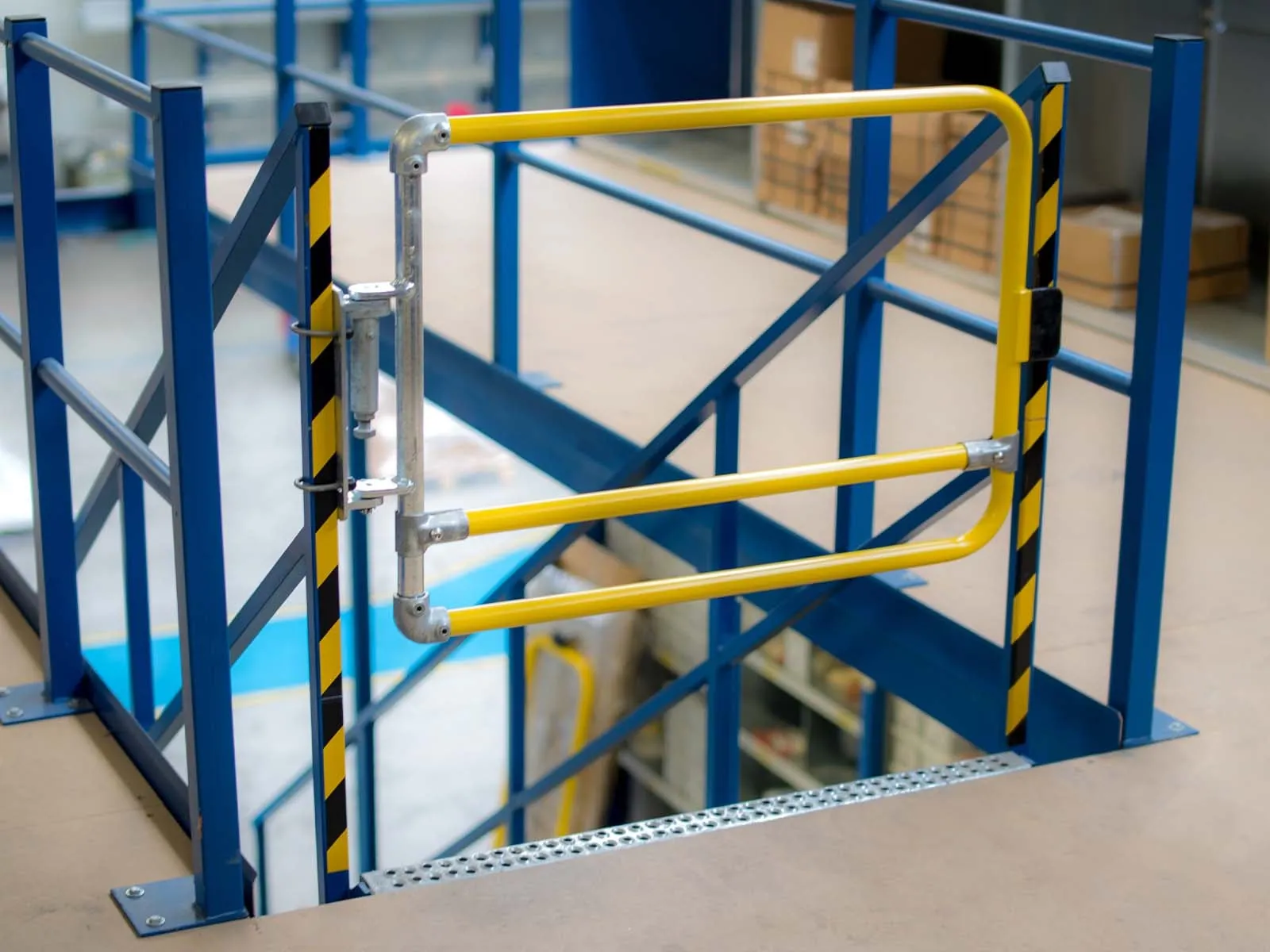
A roof hatch is an opening in the walking surface, and the area around an open hatch is a fall exposure. Canadian OH&S regulations require employers to protect workers from falls at unguarded edges and openings, and a guardrail or comparable protection is the standard control for the exposure created when the hatch is open and a worker is alongside it. A self-closing gate or a fixed guardrail around the hatch opening keeps the protection in place without depending on the cover being shut. Because the specific requirement depends on the province and the type of workplace, a qualified person should evaluate the hatch and confirm the governing regulation.
What are the 4 types of fall protection?
Fall protection is usually grouped by the hierarchy of controls: elimination (remove the hazard or the need to work at height), passive prevention (guardrails, covers, and other physical barriers that need no worker action), active fall restraint or fall arrest (harness-and-anchor systems that prevent or stop a fall), and administrative controls (warning lines, training, and procedures). A freestanding guardrail is a passive prevention control, which is why it sits above harness-based systems in the order an employer should consider. The CSA Z259 series covers the equipment used across these categories.
What is the minimum height for fall protection?
The height that triggers fall protection is set by each province or territory, so there is no single national figure. A common trigger across Canadian jurisdictions is a fall of 3 metres (about 10 feet), but several jurisdictions require protection at lower heights for specific work or near particular hazards, and the federal regime under the Canada Labour Code applies to federally regulated workplaces. Confirm the governing regulation for the site. Where a guardrail is the chosen control, its height and strength must meet the requirements of the applicable regulation and CSA standard.
CONTACT
Installed and Supported by Tritech Fall Protection
Our team is ready to help you implement a compliant, non-penetrating fall protection solution tailored to your facility.
Let’s Discuss Your Project
"*" indicates required fields