PROCESSING · BOTTLING · BREWING · DAIRY · COLD STORAGE
Fall Protection for Food & Beverage Facilities
Engineered access and tie-off for processing, bottling, brewing, dairy and cold storage plants, designed around washdown, sanitation and your production schedule. Tritech engineers, fabricates, installs and certifies food and beverage fall protection, with P.Eng.-stamped drawings for every engineered system. We walk the plant with your sanitation and maintenance teams before we design, and we come back every year to recertify what we built. Since 1993, from offices in Calgary and Orlando.
- 1993 Designing and installing engineered fall protection since 1993
- Design-build Engineer, fabricate, install and certify, under one contract
- P.Eng.-stamped Drawings sealed by a licensed Professional Engineer (P.Eng.)
- Canada + US Offices in Calgary and Orlando
The problem
Where Food and Beverage Plants Put People at Height
In a food plant, work at height is routine. A QA technician climbs to a tanker hatch to pull a sample before the load is accepted. A sanitation crew works above a filler during washdown. A mechanic reaches a drive motor on an overhead conveyor. A brewer adds hops from the top of a fermenter. A refrigeration technician crosses the roof to a condenser. Each task repeats every shift, often on wet or chemical-washed surfaces.
Food and beverage facility fall protection has to do two jobs: stop the fall and pass the sanitation audit. Tritech starts with a fall hazard assessment of the whole plant, then designs a system for each exposure that holds up to washdown and keeps the line running.
-
Repeated every shift.
Sampling, sanitation, maintenance and roof work run on a schedule, so the exposure adds up across every shift and every crew.
-
Wet and washed-down surfaces.
Washdown leaves platforms, ladders and tanker tops wet or slick, which makes a slip at height more likely.
-
Two jobs, one system.
The system has to stop a fall and still pass the sanitation audit over open product zones.
The constraint
Built for Washdown, Sanitation and Food Safety Audits
A generic fall protection kit is designed for a generic site. A food plant is not one. Anything installed over an open product zone becomes part of the sanitation program: it is washed down, checked by the food safety team and audited. Hardware that sheds rust, flaking paint or lubricant over product, or that traps water and residue, is a contamination risk that no fall rating will fix.
Tritech designs each system for the zone it sits in. Material and finish are selected for the washdown and cleaning chemicals in that area, such as stainless, galvanized or coated steel. Hardware is located and detailed so it does not drip or shed over product, and kept clear of the paths your sanitation crew needs.
Systems are designed for CFIA-regulated facilities, with fall protection engineered to the CSA Z259 family of standards and the provincial occupational health and safety regulations where the plant operates.
| Question | Answer |
|---|---|
| Which materials do you use in washdown areas? | Material and finish are chosen for the washdown and chemicals in each zone, such as stainless, galvanized or coated steel. We review the selection with your sanitation and food safety team before fabrication. |
| Will it hold up in a food safety audit? | It is designed for one: no shedding hardware over product zones, cleanable surfaces, and a drawing set you can show the auditor. |
| Which fall protection rules apply? | Provincial OHS regulations for the plant, the CSA Z259 family for system design, and P.Eng.-stamped drawings for each engineered system. |
One team
One Team: Engineer, Fabricate, Install, Certify
-
01
Assess
Plant walk, every exposure ranked, elimination options first
-
02
Engineer
Designed to your structure and clearances, with P.Eng.-stamped drawings
-
03
Fabricate
Built to the drawings, with materials chosen for each washdown zone
-
04
Install
Tritech crews, scheduled around sanitation and shutdown windows
-
05
Certify
Certified at handover, with user training and the O&M manual
-
06
Recertify
Annual inspection and recertification by the same team
Where the systems go
Six Places a Food Plant Puts People at Height
Each area lists the systems most often engineered for it, linked to the page that describes the system.
Loading, process lines and tanks
-
 01
Tanker Truck and Railcar Loading for Food-Grade Liquids
Milk, juice, syrup, beer and edible oil tankers are sampled, vented and hooked up for CIP from the top of the trailer or railcar. Drivers and QA technicians work on a curved, often wet surface, sometimes several times a shift.
Typical systemsDropdown gangways · Overhead rigid rail · Overhead lifelines · Loading platforms
-
 02
Overhead Conveyors, Fillers and Process Lines
Bottling and packaging lines, ovens, spiral freezers and overhead conveyors need maintenance and changeover access at height, often where clearance is tight. Overhead rigid rail keeps the anchor above the worker as they move along the line.
Typical systemsOverhead rigid rail · Horizontal lifelines · Catwalks · Crossover platforms
-
 03
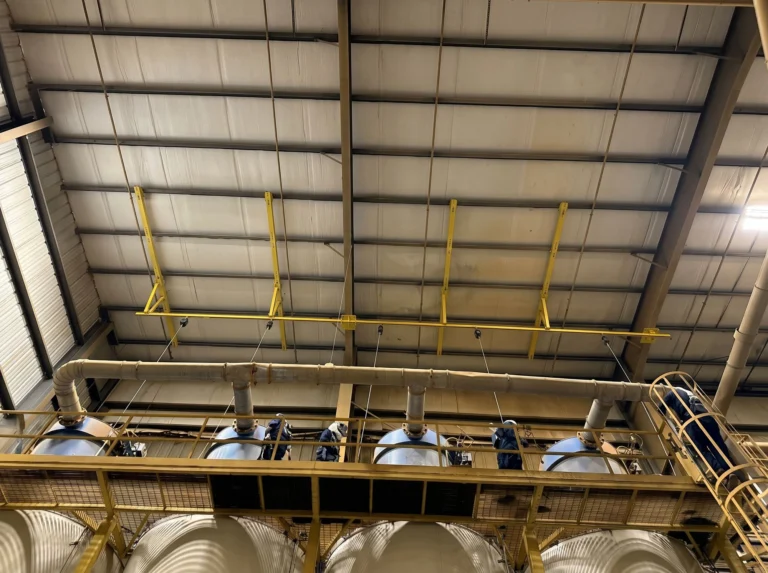
Tank, Vessel and Silo Tops
Fermenters, brite tanks, mixers and ingredient silos are opened, sampled and cleaned from the top. In breweries and distilleries, dry hopping and tank checks put people on vessel decks every brew cycle. Silo and bin entry is covered on the grain handling page.
Typical systemsCatwalks · Platform systems · Custom anchors · Grain handling
Most of this work repeats every shift. The protection should be engineered once, for the structure and the sanitation plan, not improvised task by task.
Mezzanines, piping and roofs
-
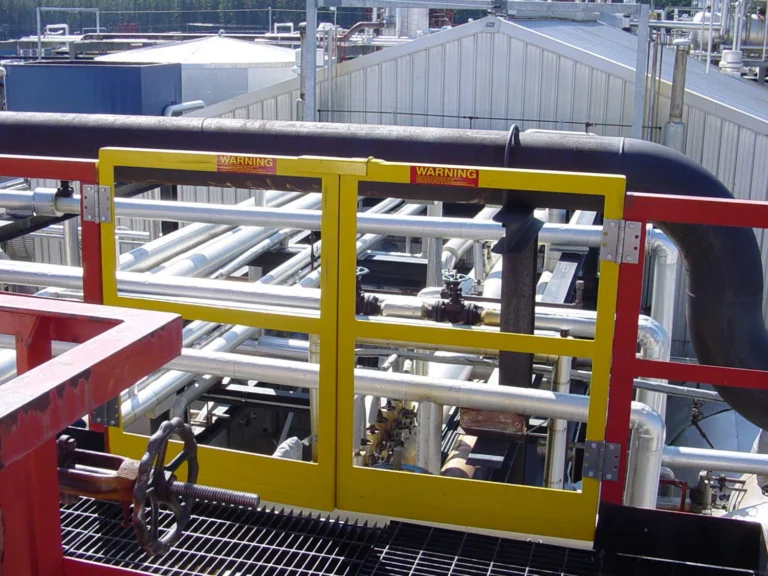 04
Mezzanines and Pallet Transfer
Packaging and ingredient mezzanines take pallet drops all day. An open pallet bay, or a gate left open, is an unprotected edge. Pallet gates and self-closing gates keep the edge closed while product moves.
Typical systemsPallet and mezzanine gates · Self-closing safety gates · Guardrail
-
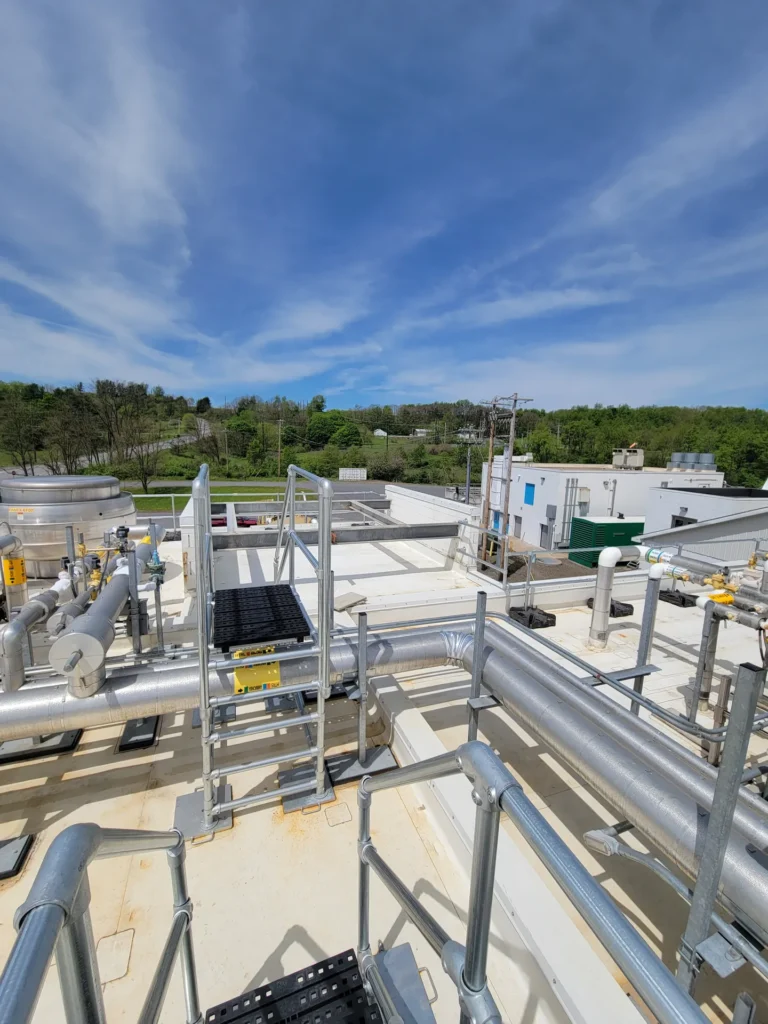 05
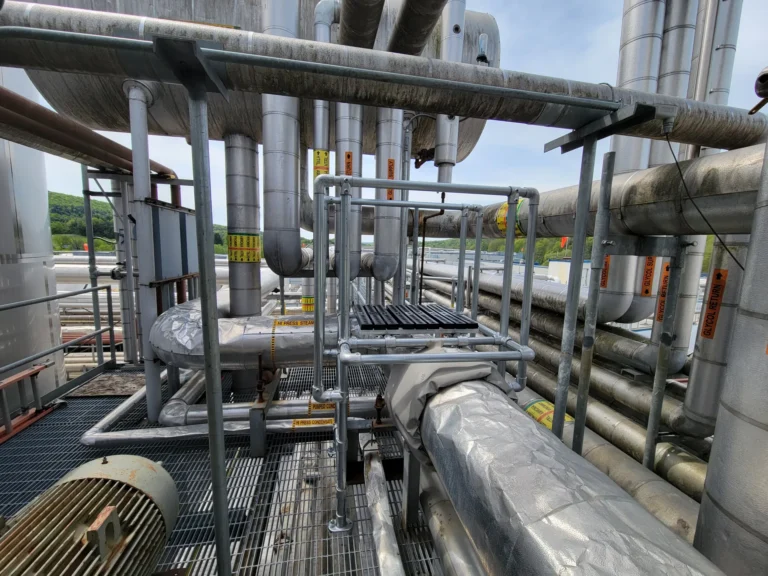
Crossings over Process Piping
Pipe racks, ducts and CIP lines split the plant floor and the roof. Without a better route, workers step over them. A crossover stair or platform gives a fixed path over the obstruction.
Typical systems -
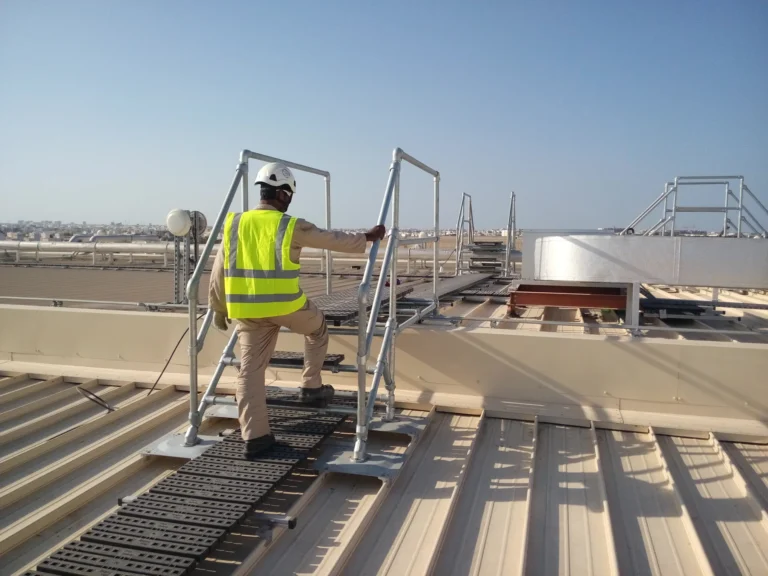 06
Rooftop Refrigeration and Mechanical Equipment
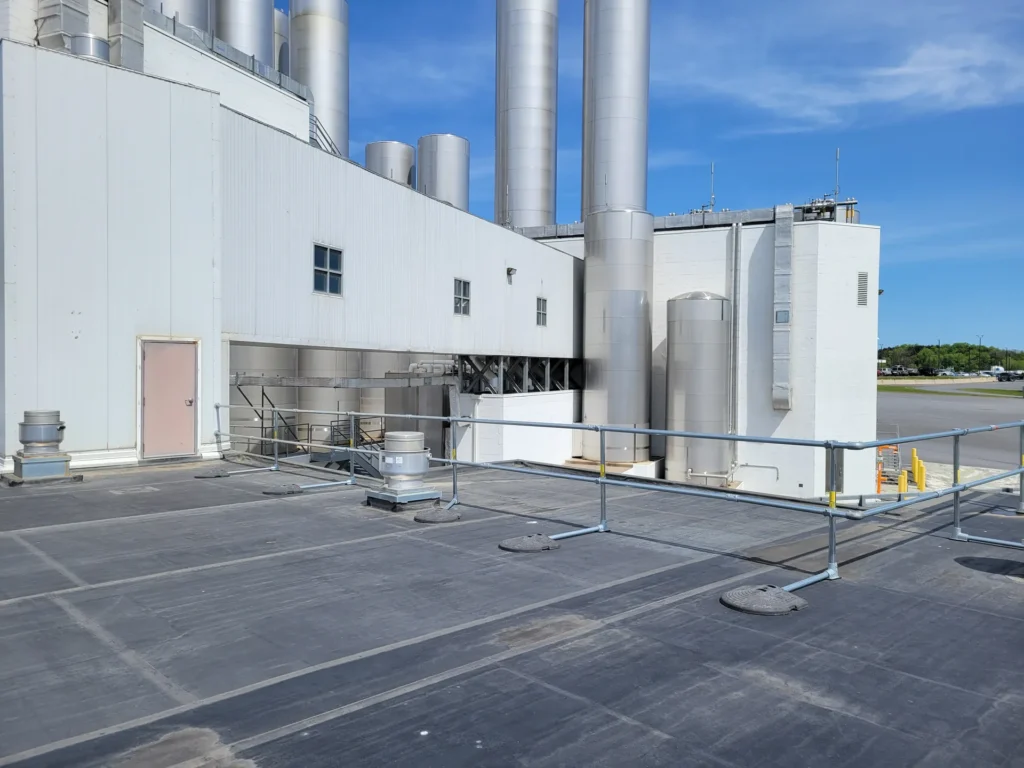
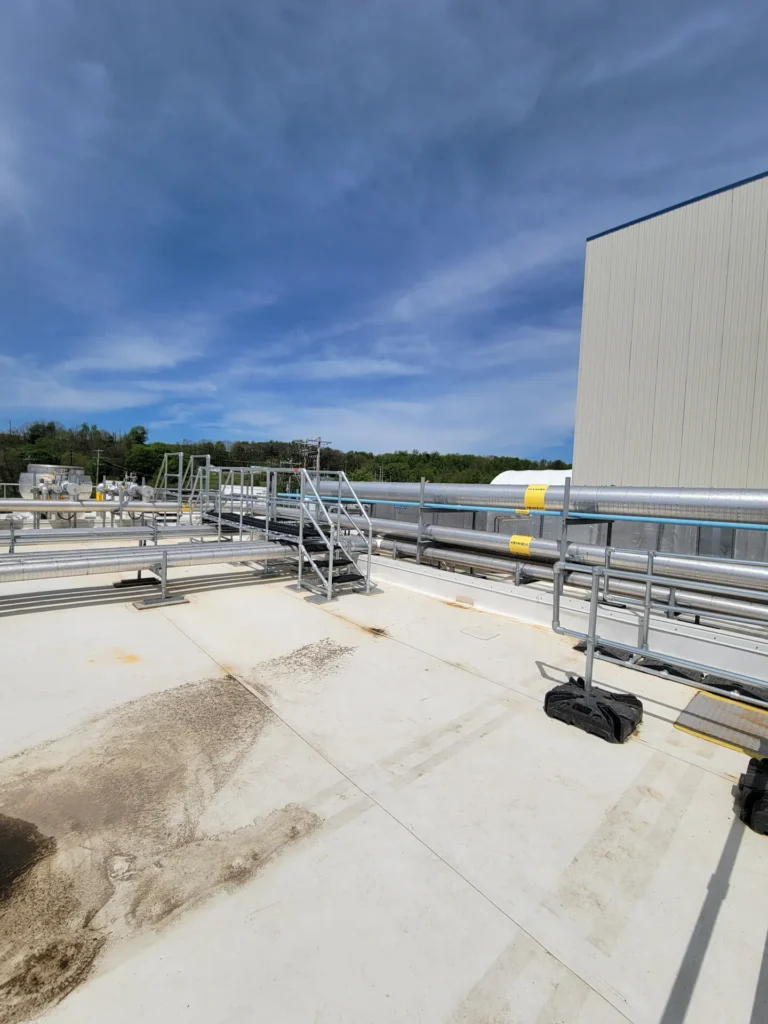
Ammonia condensers, evaporators, exhaust fans and roof hatches bring refrigeration and maintenance technicians to the roof in every season. Walkways, crossovers and guardrail give them a defined route and a protected edge.
Typical systemsRooftop walkways · Crossover platforms · Parapet guardrail · Freestanding roof guardrail · Horizontal lifelines
Schedule
Installed Around Your Production Schedule
Downtime on a food line is expensive, and sanitation windows are short. Tritech plans the install before the crew arrives. The survey, design and fabrication are finished first, so time on your floor is spent installing, not measuring.
Work is sequenced into sanitation shifts and planned shutdowns, and phased line by line where needed. For multisite programs, one specification and one drawing standard carry across every plant, so corporate EHS reviews the same system each time.
-
Sanitation shifts and shutdowns.
Install work is scheduled into the windows your plant already has.
-
Phased installs.
Line by line or area by area, so production keeps running elsewhere.
-
One specification, every plant.
The same design standard across a multisite rollout.
Proof
Engineered, Installed and Certified by One Team
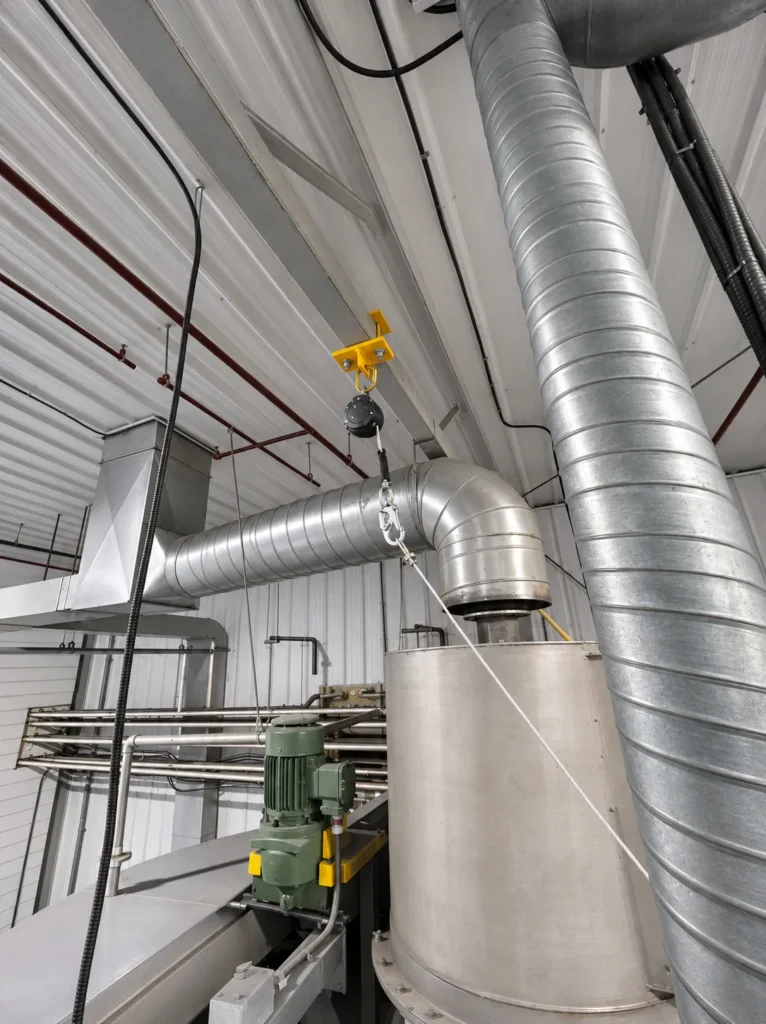
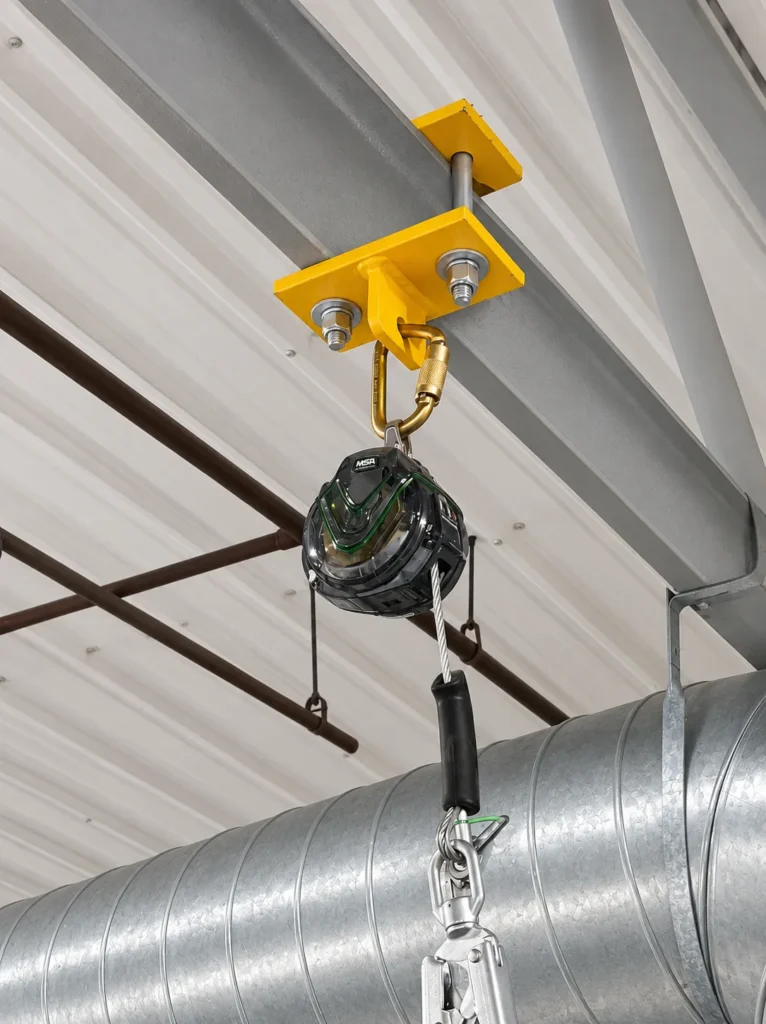
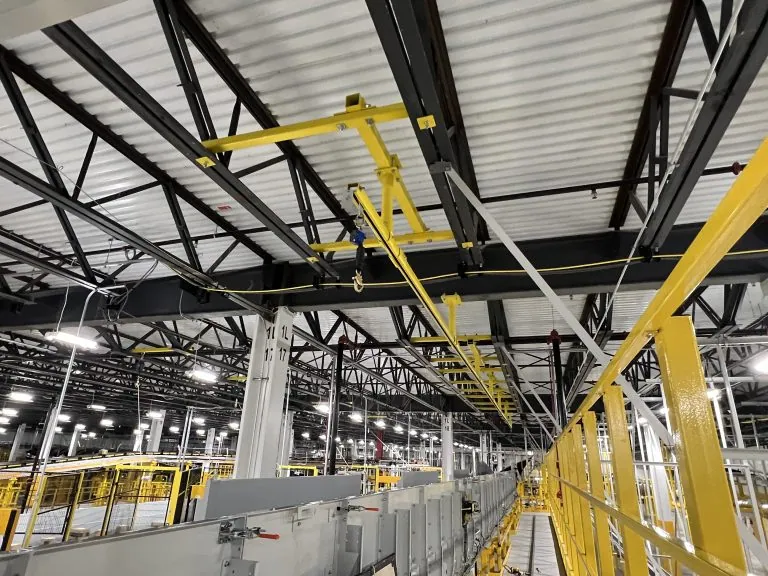
The overhead anchor and self-retracting lifeline shown here were installed by Tritech above process equipment in a food processing plant, with the tie-off point placed clear of the ductwork and piping around it.
Since 1993, Tritech has engineered, fabricated, installed and certified fall protection for industrial plants across Canada and the US. The systems food and beverage plants need, including overhead rigid rail over loading racks and process lines, platforms and catwalks over tanks, gates on mezzanines, and rooftop walkways and crossovers, are the core of our work.
For a worked example of the process, read the crane-mounted rigid rail case study, or browse our case studies and project gallery. See what our fall protection services include and how our process runs from assessment to recertification.
-
Since 1993.
More than 30 years designing and installing engineered fall protection.
-
Stamped drawings.
P.Eng.-stamped drawings for each engineered system.
-
One point of accountability.
The team that designs the system installs it, certifies it and comes back to recertify it.
Before a project
What Plant and EHS Managers Ask Before a Project
Short answers to the questions that come up in the first meeting.
-
Is there enough fall clearance over the line?
Clearance is checked for each exposure during design. Where it is tight, an overhead anchor with a self-retracting lifeline is often the answer, because the anchor sits above the worker instead of at foot level.
-
Can it attach to our existing structure?
Often, yes. The engineer checks the existing steel or roof structure for the loads. Where it cannot carry them, we design a freestanding support.
-
Will it pass a food safety audit?
Material, finish and location are chosen for each sanitation zone, and you get a drawing set to show the auditor.
-
Who certifies it?
Tritech does. The drawings are P.Eng.-stamped, the system is certified at handover, and the same team handles annual recertification.
Systems we install
Systems Engineered for Food and Beverage Plants
The system families we design, fabricate, install and certify for food and beverage facilities, selected and combined for the structure, the task and the sanitation zone.
| System family | Where it fits on the site | Pages |
|---|---|---|
| Overhead rigid rail | Conveyors, fillers, tanker bays and process lines with tight clearance | Rigid rail systems |
| Overhead and horizontal lifelines | Truck and tanker bays, long process lines, roofs | Overhead lifeline systems Horizontal lifeline systems |
| Dropdown gangways and loading platforms | Tanker and railcar sampling, hatch and CIP access | Dropdown gangways Platform systems |
| Platforms, catwalks and crossovers | Tank tops, equipment access, piping and duct crossings | Platform systems Catwalks Crossover platforms |
| Guardrail and gates | Mezzanines, platforms, roof edges and pallet drops | Barrier systems Pallet and mezzanine gates Self-closing safety gates |
| Custom anchors | Vessel and silo tops, overhead steel | Custom anchors |
| Rooftop walkways and guardrail | Refrigeration and mechanical roofs | Rooftop walkways Parapet guardrail Freestanding roof guardrail |
Keep It Certified
An engineered system stays in service only while it is inspected and recertified. Tritech runs annual inspection and recertification across every plant in your program, including systems we did not install. Every system protects someone who is going home tonight.
Industries
Sites like yours.
FAQ
Answers to Key Questions
What fall protection is suitable for washdown areas in food plants?
Systems built from materials and finishes that hold up to the washdown and cleaning chemicals in that zone, such as stainless, galvanized or coated steel, and detailed so nothing sheds or drips over product. Overhead rigid rail, guardrail, gates and platforms can all be specified this way. Tritech selects the material zone by zone during design.
Can overhead rigid rail be installed over a conveyor or filler without contaminating product?
Yes, when it is designed for it. The rail, trolleys and supports are located and finished for the sanitation zone, kept clear of the cleaning path, and reviewed with your food safety team before fabrication.
How do you protect workers on top of milk, juice or beer tankers during sampling and loading?
With a dropdown gangway and platform at the loading position, an overhead rigid rail or lifeline above the trailer, or both. The choice depends on how often the top is accessed, the trailer types you load, and the clearance at the bay.
What height triggers fall protection in a food processing plant?
It depends on the province. Most food plants fall under provincial occupational health and safety regulations, and the trigger height and required controls vary from one province to the next. Tritech’s fall hazard assessment records which rule applies to each exposure in your plant.
Can fall protection be installed without shutting down production?
Usually, yes. Design and fabrication are finished before the crew arrives, and installation is scheduled into sanitation shifts, weekends or planned shutdowns. Larger jobs are phased so other lines keep running.
How often does an engineered fall protection system in a food plant need inspection?
Plan on at least an annual inspection and recertification, plus the checks before each use that the equipment manufacturer requires. Washdown and chemical exposure can call for closer attention to corrosion. Tritech runs annual inspection programs across multisite fleets.
Speak to a Fall Protection Specialist
Start with a Fall Hazard Assessment of Your Plant
Tell us where your people work at height. We will walk the plant with your team, give you a prioritized list of every exposure, and design a stamped system for each one, scheduled around your sanitation and production windows.
Prefer to talk?
- Email sales@tritechfallprotection.com
- Canada 1-877-287-0808
- US 1-833-951-9777